How Much Does Window Installation Cost (Real Prices 2026)
8 Minute Read

Posted 7.22.26

Window replacement is one of those projects where homeowners almost always go in with the wrong number in mind. The figures you see in advertisements are rarely the number you end up paying, and the gap between the low end and the high end of the range is wide enough to matter significantly in a household budget. How much does window installation cost in 2026 depends on window type, frame material, glass package, number of windows, and regional labor rates, and understanding each variable before getting estimates puts you in a much stronger position. Before committing to a project, our window installation process gives Carson homeowners a clear picture of what it costs to install replacement windows in their specific home. This guide breaks down every cost category with real 2026 numbers.
Here is what this guide covers:
- National average window installation costs in 2026
- Per-window pricing by window type and frame material
- What drives costs up and where you can reasonably save
- A full price comparison table across common window types
- What to expect for a whole-home replacement project
What Window Installation Actually Costs in 2026

According to a This Old House homeowner survey of 1,000 respondents, most brands charge between $232 and $740 per window fully installed, with the national average landing around $477 per window for a standard replacement, though premium brands like Andersen reach $740 per window and higher. In Southern California, where labor rates run above the national average, Carson homeowners should expect costs toward the upper end of these ranges as a baseline.
We’re proud to serve homeowners in Carson, CA, and surrounding communities with windows and doors services and more.
The overall range for window installation in 2026 is $300 to $2,500 per window fully installed, with standard double-pane vinyl replacements at the lower end and large custom or specialty windows at the upper end. A whole-home replacement of 10 to 15 windows typically runs between $8,000 and $20,000 for most Southern California homes.
8 Factors That Determine Window Installation Cost
Each of these variables affects the final price independently, and the combination of all of them determines where your project lands in the overall range.
1. Window Type
Window style is one of the most significant cost drivers after frame material. Fixed windows that do not open are the least expensive because they have fewer moving parts and simpler installation. Double-hung windows are mid-range. Casement and awning windows cost more because they require more precise installation and carry heavier hardware. Bay and bow windows are the most expensive single-window options because of their complexity and the structural support they require.
- Fixed/picture windows: $150 to $400 per window installed; simplest install, no hardware or weather-stripping for moving parts
- Double-hung windows: $300 to $900 per window installed; the most common replacement style and the benchmark for cost comparisons
- Casement or awning windows: $400 to $1,100 per window installed; crank hardware and tighter seal requirements increase material cost
- Bay or bow windows: $1,200 to $3,500 per window installed; require structural modifications and are typically the most labor-intensive single unit
2. Frame Material
Frame material affects both the upfront cost and the long-term maintenance requirements of the window.
- Vinyl: $300 to $900 per window installed; most popular material for residential replacement; no painting required; strong energy performance available across price tiers
- Fiberglass: $500 to $1,500 per window installed; more dimensionally stable than vinyl; longer service life; paintable; preferred by homeowners prioritizing premium quality
- Wood-clad: $800 to $2,500 per window installed; natural wood interior with protective exterior cladding; highest visual quality; requires more maintenance than vinyl or fiberglass
- Aluminum: $200 to $600 per window installed; common in commercial and mid-century residential; conducts heat and cold more than vinyl or fiberglass; less common in new residential replacements
3. Glass Package
The glass package, meaning the number of panes, the type of coating, and whether gas fill is included, affects both the price and the energy performance of the window.
- Single-pane: Found mainly in older homes; minimal insulation; largely obsolete in new window installation; replacement with double-pane is almost always recommended
- Double-pane with low-e coating: $400 to $900 per window installed; the standard for most residential replacements in 2026; ENERGY STAR certified options available at this tier
- Triple-pane: $700 to $1,500 per window installed; superior insulation; most relevant in climates with extreme temperature swings; provides additional sound reduction
4. Window Size

Larger windows cost more in both materials and labor. Standard mid-size windows in the 3-by-4 to 4-by-6 foot range represent the bulk of residential replacements. Oversized windows above 4 by 6 feet require more material, heavier handling, and more installation time.
- Small (under 3 by 3 feet): $150 to $500 per window installed
- Standard mid-size (3 by 4 to 4 by 6 feet): $300 to $1,200 per window installed
- Large (over 4 by 6 feet): $700 to $3,000 per window installed
5. Number of Windows
Labor efficiency improves on larger projects. A contractor mobilizing crew and equipment for a single-window replacement spreads fixed costs over fewer units, making per-window cost higher than the same contractor replacing 15 windows at once. Choosing to replace windows all at once almost always produces a lower per-window cost than phased replacement.
- 1 to 3 windows: Expect to pay at the higher end of the per-window range; fixed mobilization costs have minimal windows to offset them
- 5 to 10 windows: Mid-range per-window pricing with modest volume efficiency
- 10-plus windows: Most contractors offer volume pricing that reduces per-window cost; the best opportunity for negotiating total project price
6. Structural Condition and Frame Repair
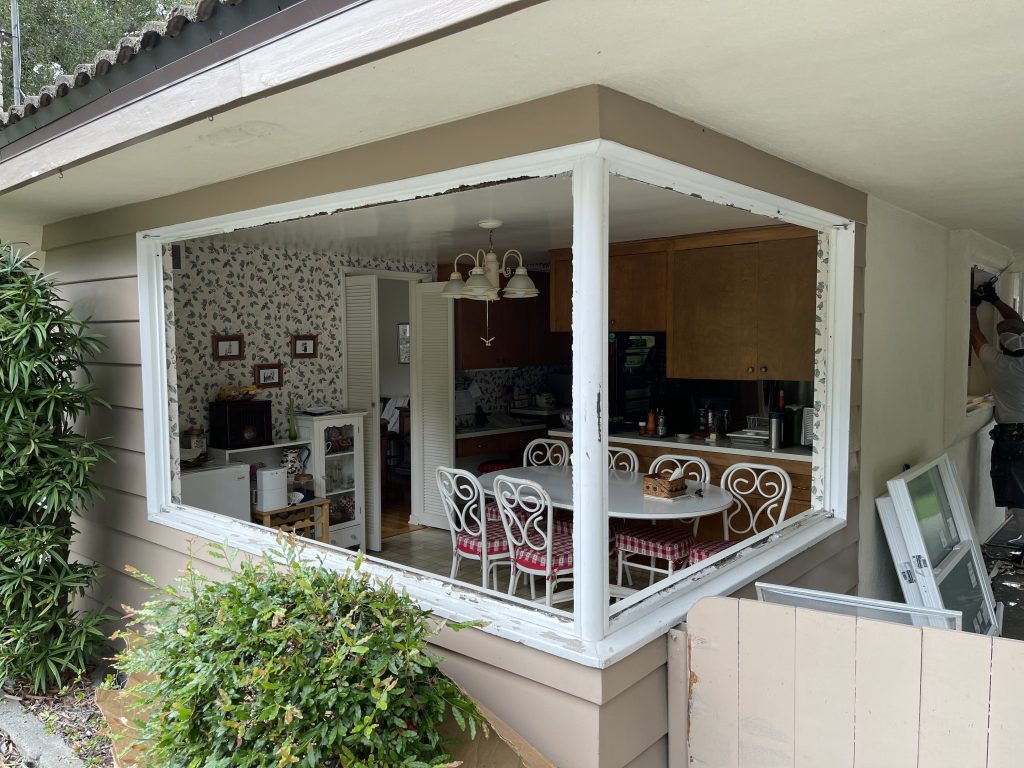
The condition of the existing frame and surrounding framing is not visible until the old window is removed. Rot, water damage, or insect damage requires repair before the new window can be installed, and these repairs add cost that is impossible to estimate before demolition.
- Clean frame in good condition: No additional cost beyond window and installation
- Minor frame repair: $100 to $500 per window depending on the extent of deterioration
- Significant rot or structural damage: $500 to $2,000 per window for framing repairs before new installation can proceed
7. Labor and Regional Rates
Labor represents 15 to 30 percent of total window installation cost. National averages run $100 to $300 per window for labor alone. In Southern California, where Carson and surrounding cities carry higher labor costs than most national markets, budget $150 to $400 per window for labor as a realistic baseline before factoring in any complicating conditions.
- Standard replacement install: $150 to $400 per window in Southern California; assumes no frame damage and accessible first-floor location
- Upper-floor or difficult access: Add $50 to $150 per window for scaffolding, extended ladders, or difficult interior conditions
- Full-frame installation: Adds $50 to $200 per window versus insert replacement due to additional flashing, cladding, and trim integration
8. Permits and Disposal
Permit fees for window installation vary by city and county. Like-for-like replacements in most California jurisdictions do not require a permit, reducing this cost to zero. Projects that change opening sizes, add new windows, or involve structural modifications require permits that add $200 to $800 to the project cost. Disposal of old windows typically adds $50 to $150 to the project.
- Like-for-like replacement: Usually no permit required in most California cities
- Opening modification or new window: $200 to $800 in permit fees depending on jurisdiction
- Disposal: $50 to $150 for old window removal and disposal; confirm this is included in your contractor’s bid
Window Cost Comparison Table
| Window Type | Frame Material | Installed Cost Per Window |
| Fixed/picture | Vinyl | $150 to $400 |
| Double-hung | Vinyl | $300 to $900 |
| Double-hung | Fiberglass | $500 to $1,200 |
| Casement | Vinyl | $400 to $1,100 |
| Casement | Fiberglass | $600 to $1,500 |
| Double-hung | Wood-clad | $800 to $2,000 |
| Bay or bow | Vinyl | $1,200 to $3,500 |
| Custom or specialty | Any | $1,500 to $5,000-plus |
Common FAQs About Window Installation Cost
These are the questions homeowners most commonly ask when budgeting a window replacement project.
Is it cheaper to replace all windows at once or in phases?
Replacing all windows in one project is almost always less expensive per window than phased replacement. Mobilization costs are spread across more units, the contractor can schedule trades more efficiently, and most contractors offer volume pricing on larger projects. If budget requires phasing, prioritize the windows with the worst energy performance or structural condition first.
Do new windows actually save money on energy bills?
Yes, and the savings are documented. Replacing single-pane windows with ENERGY STAR certified double-pane low-e units in Southern California typically reduces cooling and heating costs by 10 to 20 percent annually. For a home spending $200 per month on HVAC, that is $240 to $480 per year in savings. Over 10 years, that offsets a meaningful portion of the installation cost on top of the comfort improvement.
What is the most cost-effective window material in 2026?
Vinyl remains the most cost-effective choice for most homeowners in 2026. It delivers strong energy performance, requires no painting or sealing, resists rot, and is available across the full range of ENERGY STAR certification levels. The price premium for fiberglass is justified when long-term durability, dimensional stability in extreme temperatures, or paintability are priorities.
How do I know if my quotes are fair?
Get three itemized quotes and confirm each specifies the window brand, model, frame material, glass package, labor scope, permit responsibility, and disposal. If quotes vary significantly, the scope of work may differ rather than just the price. A bid that is 30 percent below others without explanation usually reflects a narrower scope, lower-quality product substitution, or labor that does not include proper flashing and air sealing.
C&M Home Revival Prices Windows Honestly
The number on an estimate means very little if it does not reflect the full scope of what the project actually requires. At C&M Home Revival, every Carson window estimate is itemized, covers the complete scope of work, and does not change once you sign unless something genuinely unexpected is discovered during installation. Written estimates, no pressure, and a project manager on every job.
Get your window installation quote and compare it against what you read here.