Are Bathroom Faucets Universal (What To Know First)
8 Minute Read

Posted 6.24.26

It is a reasonable assumption. You see a faucet you like, figure it will fit your sink, and move forward. But are bathroom faucets universal? The short answer is no, and learning why before you shop saves you from a frustrating return or a costly installation adjustment. If you are planning a bathroom update and want guidance that goes beyond the fixture itself, our bathroom remodeling services are built around making these decisions easier. This guide gives Whittier homeowners a clear breakdown of what actually determines faucet compatibility.
Here is what this guide covers:
- Why bathroom faucets are not truly universal
- The hole configurations that determine which faucet fits your sink
- Spout height, reach, and mounting considerations
- What is standardized across most faucets and what varies
- A checklist for choosing a compatible faucet before you buy
The Direct Answer: No, But There Are Standards
Bathroom faucets are not one-size-fits-all, but they are also not entirely unpredictable. Most manufacturers follow common sizing conventions around mounting hole configurations and water supply connections. What varies significantly is the number of holes required, the spacing between them, the spout height, the mounting style, and the valve type inside the faucet. When any of these factors do not align with your sink, you either cannot install the faucet at all or need to modify the countertop or sink to make it work.
According to the U.S. Environmental Protection Agency, replacing old, inefficient bathroom faucets with WaterSense labeled models can save the average family 700 gallons of water per year, equivalent to 45 showers. That makes getting the right faucet worth the research, both for fit and for long-term efficiency.
We’re proud to serve homeowners in Whittier, CA, and surrounding communities with bathroom remodeling services and more.
5 Factors That Determine Faucet Compatibility
Faucet compatibility comes down to five distinct factors, and all of them need to align with your existing sink and plumbing setup before you commit to a purchase. Understanding each one separately makes the selection process far more straightforward than it might initially appear.
1. Hole Configuration
The single most important compatibility factor is the number of holes in your sink or countertop and the spacing between them. Bathroom sinks typically come pre-drilled in one of three configurations, and the faucet must match.
- Single-hole: Requires one pre-drilled hole. Single-handle faucets and some two-handle designs with a base plate fit this configuration. Single-hole is the most flexible because a deck plate or escutcheon can cover unused holes if the sink has more than one.
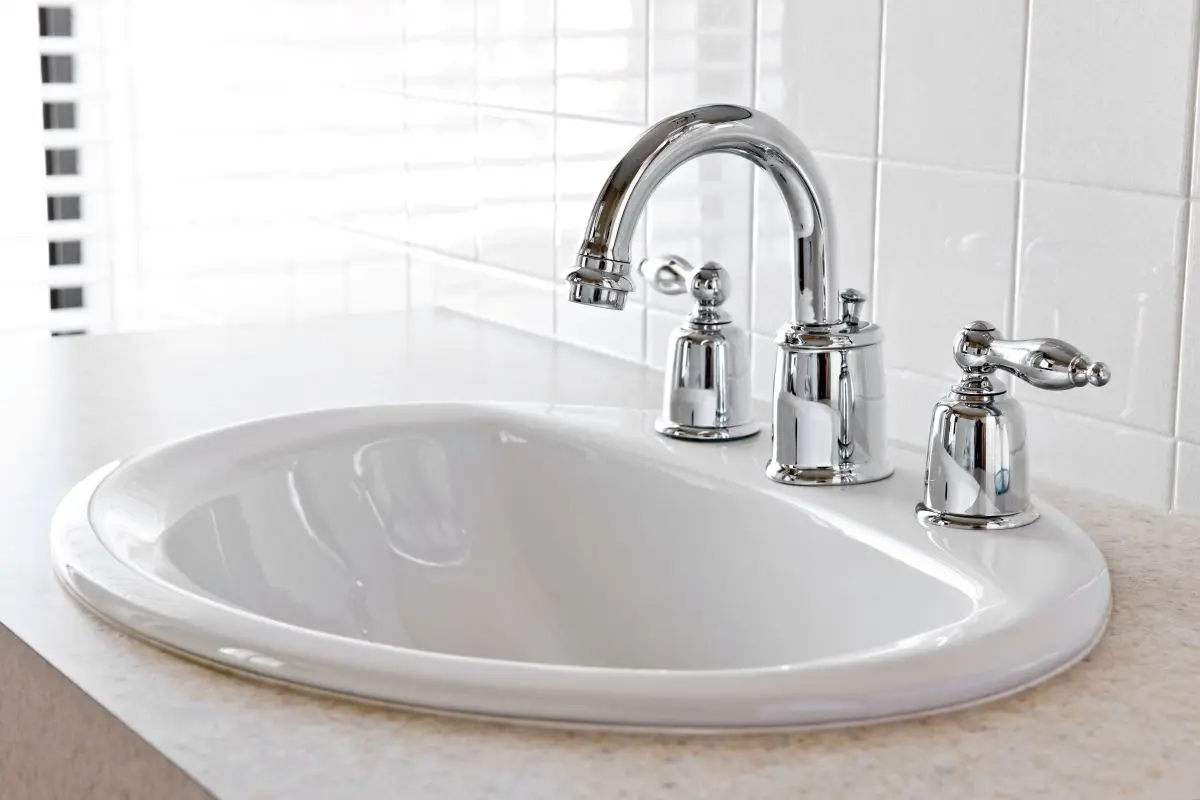
- Centerset: Requires three holes spaced 4 inches apart from center to center. The spout and handles mount on a shared base plate. This is the most common configuration in standard residential bathrooms.
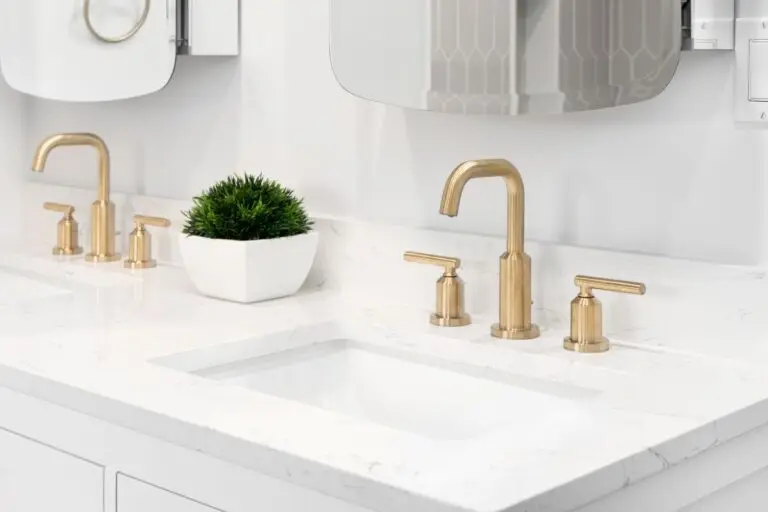
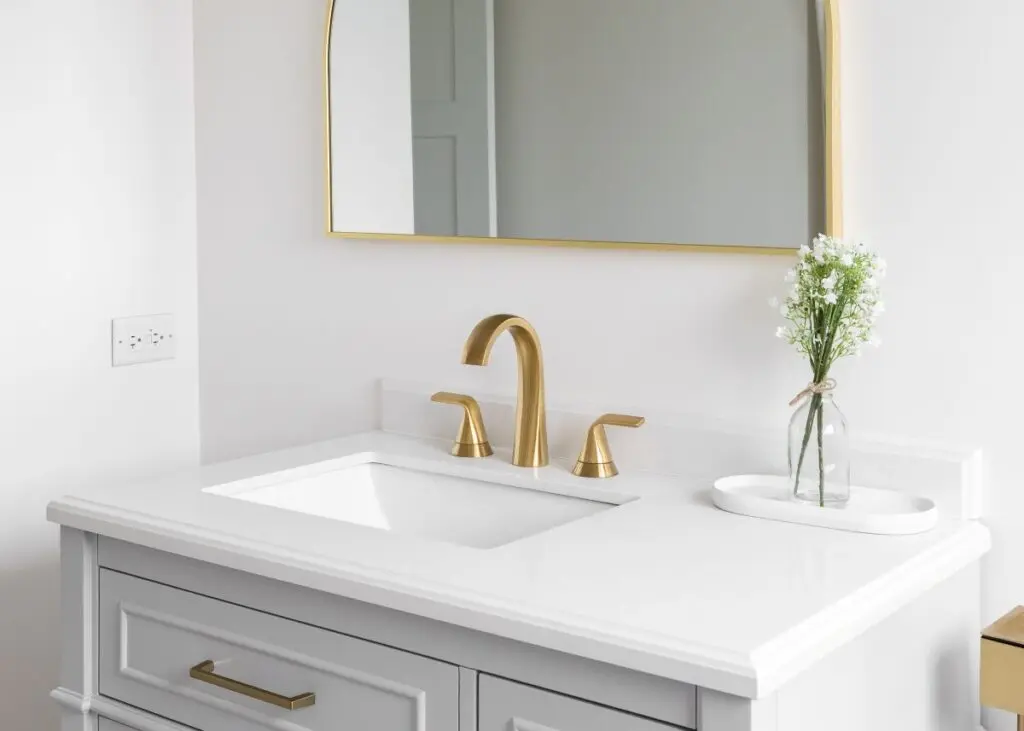
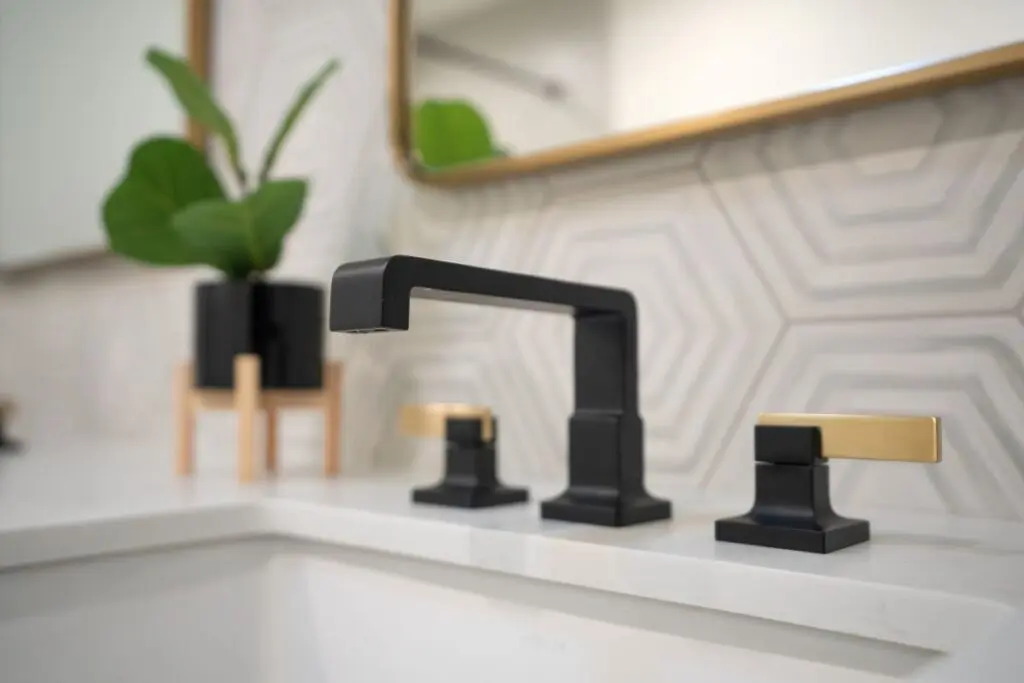
- Widespread: Requires three holes spaced 8 to 16 inches apart. The spout and handles are installed as three separate pieces. This configuration is associated with higher-end primary bathrooms and provides a more architectural, spread-out appearance.
Replacing a widespread faucet with a centerset faucet, or vice versa, typically requires modification to the mounting surface, which adds cost and complexity beyond the faucet itself.
2. Spout Height and Reach
Even when the hole configuration matches, spout dimensions matter. Spout reach is the horizontal distance from the mounting point to where water exits, and it needs to extend far enough to deliver water into the center of the basin rather than splashing the front edge. Spout height determines whether the faucet clears the sink rim and provides comfortable hand washing without awkward angles.
Vessel sinks, which sit above the countertop, require taller faucets with significant spout height to clear the elevated rim. Standard undermount and drop-in sinks work with a much wider range of spout heights. Choosing a faucet without confirming these dimensions often results in water splashing outside the basin or a spout that does not reach far enough to be usable.
3. Mounting Style
Faucets mount in one of two primary ways: deck-mounted, where the faucet installs through holes in the countertop or sink, and wall-mounted, where the supply lines come through the wall and the faucet body extends outward above the sink. These two styles are not interchangeable. Wall-mounted faucets require plumbing rough-in inside the wall at a specific height, which must be planned during renovation rather than added later without significant work.
4. Water Supply Connections
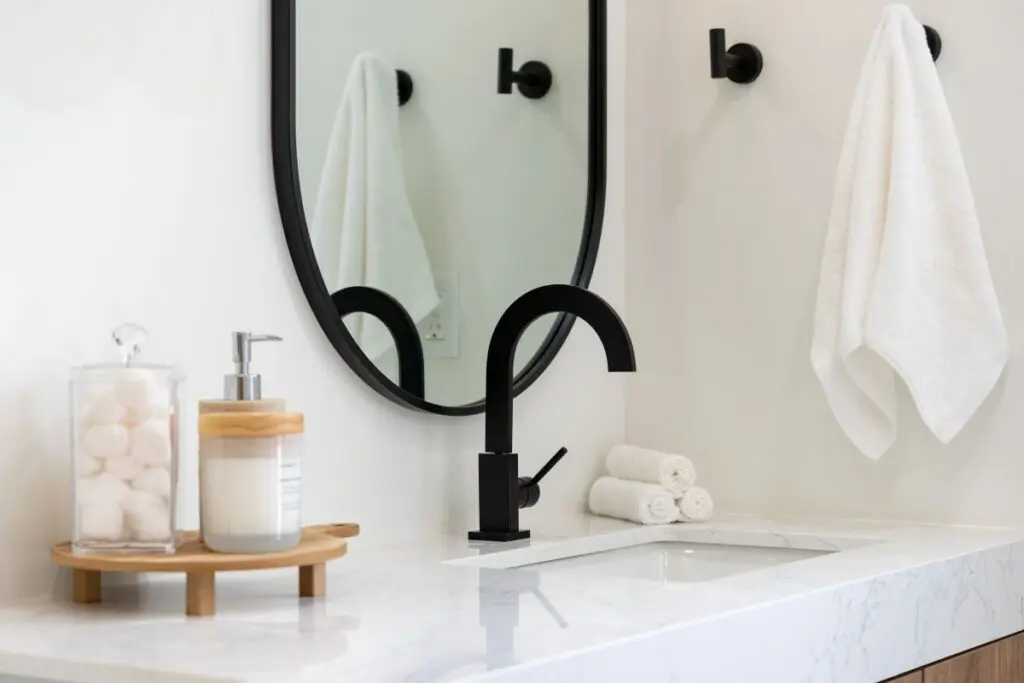
Most modern bathroom faucets in the United States use 3/8-inch compression fittings on their supply lines, which connect to standard shut-off valves. This is one area where near-universal standards genuinely apply. Older homes may have different connection sizes or threaded fittings, but inexpensive adapters typically resolve these mismatches. When ordering faucets from international manufacturers, connection standards may differ, so confirming compatibility with domestic plumbing is worth a quick check before purchasing.
5. Valve Type
The internal valve controls how water flows through the faucet. Ceramic disc valves are the most durable and widely recommended option. Cartridge valves use rubber O-rings inside a cylindrical mechanism and are very reliable. Ball valves have a single moving part and are common in single-handle designs. Compression valves are older technology and less common in modern faucets. Valve type affects long-term reliability and the availability of replacement parts, but it does not impact whether the faucet physically fits your sink.
What Is Standardized Across Most Faucets
While true universality does not exist, certain elements are consistent enough across most major manufacturers that they simplify the selection process considerably.
| Element | Standard | Notes |
| Single-hole diameter | 1 3/8 inches | Most common standard across brands |
| Centerset hole spacing | 4 inches center to center | Standard for three-hole centerset sinks |
| Widespread hole spacing | 8 to 16 inches | Varies within this range by sink |
| Supply line connections | 3/8-inch compression | Standard in U.S.; adapters available |
| Flow rate | 1.2 to 2.2 GPM | Varies by faucet and local codes |
| Aerator thread size | 15/16-inch male or 55/64-inch female | Consistent across most brands |
A Pre-Purchase Compatibility Checklist
Before selecting any faucet, work through these items to avoid installation issues after the purchase.
- Count your sink holes: Determine whether your sink has one, three, or another configuration of pre-drilled holes.
- Measure hole spacing: For three-hole sinks, measure center to center between the left and right holes to confirm centerset or widespread spacing.
- Check deck thickness: The faucet’s mounting shank must be long enough to pass through your countertop and be secured from below.
- Measure spout reach: Confirm the spout extends far enough to deliver water into the basin center without splashing.
- Check spout height: For vessel sinks especially, confirm the faucet clears the rim height comfortably.
- Confirm mounting style: Verify whether your sink and plumbing are set up for deck-mounted or wall-mounted installation before choosing a wall-mount faucet.
- Check supply connection size: Confirm the existing shut-off valve size matches the faucet supply lines or identify the adapter needed.
Common FAQs About Bathroom Faucet Compatibility
These are the questions homeowners most commonly have when replacing or upgrading a bathroom faucet. Knowing the answers before you shop makes the process significantly smoother.
Can I replace a three-hole faucet with a single-hole faucet?
Yes, with the help of a deck plate or escutcheon plate that covers the unused holes. Single-hole faucets are the most versatile option in this regard. The plate sits on the countertop and conceals the extra holes cleanly, so no countertop modification is required.
Are kitchen faucets and bathroom faucets interchangeable?
Generally no. Kitchen faucets are larger, designed for higher water flow, and built for deeper sinks with greater spout reach. Bathroom faucets operate at lower pressure and smaller scale. While the water supply connections may be similar, the proportions, mounting requirements, and functionality are designed for different applications.
What happens if I choose the wrong spout height for my sink?
A spout that is too short will not extend far enough into the basin, causing water to hit the front edge and splash the countertop. A spout that is too tall can cause splashing from excessive drop height. For vessel sinks, an undersized faucet will not clear the rim at all, making it non-functional. Always confirm spout height and reach against your specific sink dimensions before purchasing.
Do I need a plumber to replace a bathroom faucet?
Replacing a deck-mounted faucet with the same configuration is within the capability of a confident homeowner. Switching mounting styles, adding new holes to a countertop, or working with older plumbing connections benefits from professional help to ensure proper sealing and prevent leaks under the sink.
C&M Home Revival Takes the Guesswork Out of Bathroom Upgrades
Faucet compatibility is one of those details that seems minor until you are standing in a hardware store with a sink that does not match what you bought. At C&M Home Revival, we help Whittier homeowners navigate these decisions before any work begins. We assess your existing setup, walk through your options clearly, and provide written pricing before any commitment is made. Free consultations are available.
Contact our team to schedule your free consultation and take the guesswork out of your bathroom renovation.
Recent Articles