Bathroom Remodel Materials Checklist (What’s Worth It 2026)
9 Minute Read

Posted 9.17.26

Choosing the right materials is where most bathroom remodels either succeed or quietly fail. Poor material choices show up immediately in how a room looks and over time in how much it costs to maintain. Bathroom remodel materials span a wide quality and price range, and knowing which categories deserve investment versus where you can save without consequence makes a meaningful difference in the final result. If you want experienced guidance before making any commitments, our bathroom remodeling team helps Lakewood homeowners work through exactly these decisions before a project begins. This guide covers what is worth spending on, what is not, and how to build a complete materials checklist for 2026.
Here is what this guide covers:
- The material categories that define long-term performance and appearance
- What to invest in and where budget alternatives hold up equally well
- A complete checklist of every material category in a bathroom remodel
- Tile selection, overage, and ordering guidance
- What to leave to the contractor versus what you can source yourself
Why Material Selection Matters More Than Most Homeowners Realize

Material decisions made before a project begins determine the quality of the finished bathroom far more than any single contractor choice. Bathroom remodels typically cost between ,000 and 0,000 for standard projects, and material selection determines how much of that budget delivers lasting value. The reverse is also true: deliberately modest materials in secondary areas free up budget for the elements that define how the bathroom looks and performs every day.
According to industry guidance from Block Renovation, tile is the material homeowners most commonly under-order, with experts recommending 10 to 15 percent overage for standard layouts and up to 20 percent for patterns like herringbone or specialty shapes, because reorders almost never match the original production lot exactly. Getting material quantities right before the project begins is as important as choosing the right product.
We’re proud to serve homeowners in Lakewood, CA, and surrounding communities with bathroom remodeling services and more.
The Complete Bathroom Remodel Materials Checklist
Use this checklist to track selections, quantities, and order status before work begins.
Flooring Materials
Porcelain tile is the recommended standard for bathroom floors in 2026 due to its density, low porosity, and wide finish range. Large-format tile in 24×24 or larger creates a seamless, contemporary look with fewer grout lines to maintain, while smaller formats offer more design flexibility for patterns and accents.
- Porcelain tile: Most durable option for heavy foot traffic; available in matte, honed, and wood-look finishes with minimal maintenance
- Ceramic tile: Budget-friendly alternative for lower-traffic bathrooms; more porous than porcelain
- Natural stone: Marble, slate, and travertine deliver premium aesthetics but require periodic sealing and more careful maintenance
- Luxury vinyl plank: A cost-effective, fully water resistant option for guest bathrooms; sheet vinyl can last 10 to 20 years with proper care and is comfortable underfoot
- Concrete: Tough, customizable, and moisture-resistant; a rising choice for modern bathrooms
- Order quantity: Square footage plus 10 to 15 percent waste allowance, plus spare pieces for future repairs
Shower and Wet Area Materials
The shower is the most material-intensive area of any remodel. Waterproofing membrane is the most critical material in this category and should never be substituted or skipped. Matte and textured finishes provide better traction on shower floors than polished surfaces.
- Waterproofing membrane: Non-negotiable; applied to shower walls and floor before tile installation to prevent moisture penetration behind the tile
- Shower wall tile: Porcelain or ceramic for durability; zellige, subway, and large-format stone-look tiles are leading choices in 2026
- Shower floor tile: Smaller mosaic formats or textured tile for slip resistance; more grout lines equal more grip
- Acrylic surrounds: Non-porous and resistant to mold and mildew; a practical alternative to tile for budget projects
- Shower niche materials: Tile-lined recessed niches; match the wall tile or use a complementary accent material
- Grout: Unsanded for joints under 1/8 inch; sanded for wider joints; epoxy for maximum stain resistance
Vanity, Countertop, and Sink Materials
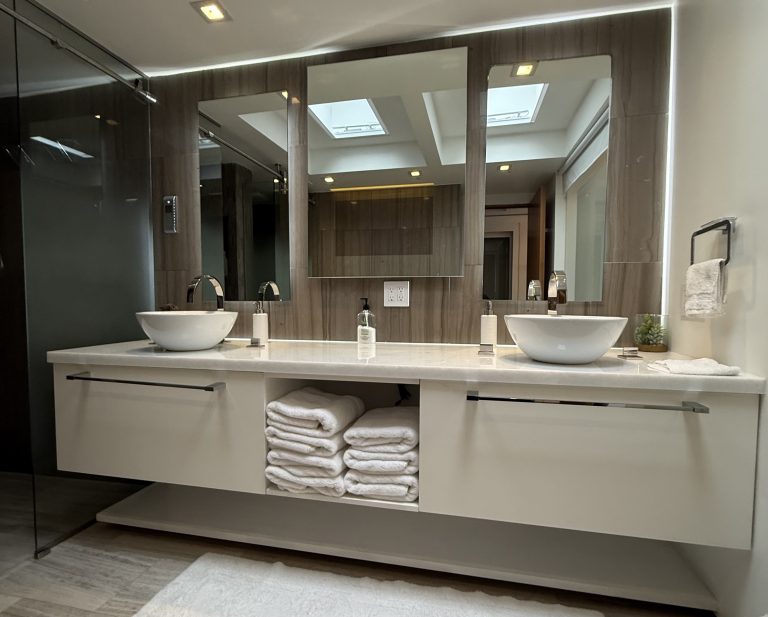
The vanity is the visual centerpiece of most bathrooms and where material quality has the highest daily visibility. Quartz is the most practical countertop choice for 2026, offering the appearance of natural stone without the sealing requirements.
- Vanity cabinet: Floating vanities make bathrooms appear larger and facilitate floor cleaning; solid plywood construction with moisture-resistant finish is the standard to require
- Countertop: Engineered quartz for durability and low maintenance; marble for premium aesthetics with regular sealing; cultured marble for budget-friendly integrated options
- Sink: Undermount ceramic or porcelain for easy cleaning; cast iron for premium durability; vessel sinks for design-forward applications
- Faucet: Solid brass or brass-core construction with a corrosion resistant quality finish; brushed gold, matte black, and brushed nickel are the leading finishes for 2026
- Supply lines: Braided stainless; pop-up drain matching the faucet finish
Wall Materials
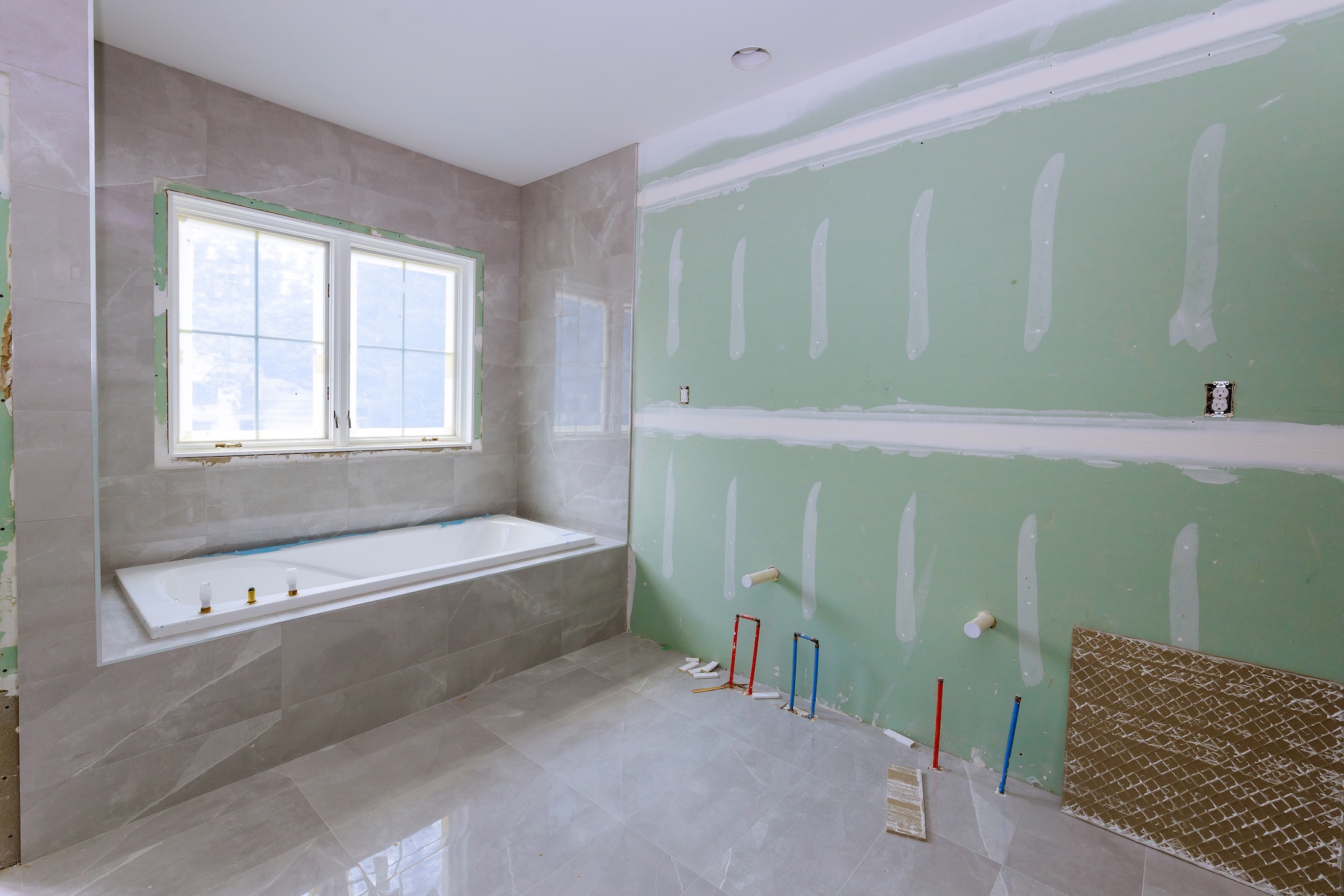
Walls outside the wet zone do not need tile, but require moisture-resistant treatment. Cement board is required behind tile in wet areas. Standard drywall with mold-resistant paint works for non-wet wall areas.
- Cement board: Required behind tile in wet areas; does not support mold growth
- Moisture-resistant drywall: Appropriate for non-wet bathroom walls; not suitable behind shower tile
- Accent tile: A feature wall or vanity backsplash in specialty tile is a strong 2026 design direction
- Paint: Mold-resistant bathroom paint in satin or semi-gloss for easy cleaning
- Caulk: Silicone-based at all tile and fixture joints; superior moisture resistance versus latex
Fixtures and Hardware
Fixtures are touched daily and define the quality impression of the finished bathroom more than any other single category. Matching or complementary finishes across faucet, towel bars, cabinet pulls, and lighting creates the cohesion that makes a bathroom feel designed rather than assembled.
- Toilet: Comfort-height (17 to 19 inches) for adult bathrooms; soft-close seat standard; WaterSense certified for water efficiency
- Showerhead: Fixed or dual-function with detachable hand shower; WaterSense certified options available in every finish
- Shower enclosure: Frameless tempered glass doors create a modern appearance and are easy to clean
- Towel bars: Match or complement the faucet finish; heated towel bars are a high-value comfort upgrade
- Cabinet hardware: Solid brass or zinc construction; match the faucet finish for visual continuity
- Lighting: Vanity sconces at eye level in the faucet finish; damp-rated for bathroom use
Behind-the-Wall and Infrastructure Materials
These materials are never seen but determine whether the visible work performs well over time. Your contractor should specify these products; this checklist helps you ask the right questions.
- Underlayment: Cement board or uncoupling membrane under floor tile for a stable, crack-resistant substrate
- Mortar: Large-format tile requires medium-bed mortar with greater coverage than standard thinset
- Shower pan liner or pre-sloped pan: Beneath the shower floor tile for proper drainage and secondary waterproofing
- Built-in shower niches: Eliminate corrosion-prone caddies and provide clean storage; frame and waterproof during rough-in, tile during finish work
- Ventilation fan: Humidity-sensing fans are the current standard; minimum 50 CFM, ideally 1 CFM per square foot of bathroom space
- Permit compliance: Some jurisdictions require specific products; confirm with your contractor before ordering
3 Material Categories Worth Splurging On
These three deliver the strongest return on additional spending.
1. Floor and Shower Tile
Tile is the most permanent material decision in a bathroom remodel. It cannot be easily updated without a full demolition, and quality differences between entry-level and mid-range tile are immediately visible in surface texture, consistency, and how well the room photographs. Mid-range porcelain or stone-look tile at $4 to $10 per square foot installed delivers noticeably better results than budget tile at $1 to $3 per square foot, and the cost difference for an average bathroom is less than $1,000.
2. Faucet and Fixture Finish Quality
Cheap faucets fail faster, finish peels earlier, and handle with less quality in daily use. A quality solid brass faucet in a durable PVD finish costs $150 to $400 and will outlast a budget chrome faucet by a decade or more in daily use. The same principle applies to showerheads, toilet flush valves, and cabinet hardware. Spending an extra $200 to $400 across the fixture and hardware category produces a bathroom that feels significantly more expensive than it actually was.
3. Countertop Material
The vanity countertop is seen and touched every day and sits at eye level in most bathrooms. Upgrading from a standard laminate or low-grade cultured marble to a quartz countertop adds $300 to $800 for an average vanity and delivers a visual upgrade that is noticed immediately. Engineered quartz is available in various colors and patterns that closely replicate natural stone, and it eliminates the sealing and staining maintenance that actual stone requires.

Common FAQs About Bathroom Remodel Materials
Homeowners sourcing materials for the first time consistently ask the same set of practical questions before and during a remodel.
Should I buy my own materials or let the contractor supply them?
Buying finish materials like tile and vanities from a big box store or online retailer can save the contractor markup. For waterproofing membrane, cement board, mortar, and other behind-the-wall materials, let the contractor supply and specify them. When a contractor supplies and installs a material, any defect is their problem to resolve. When you supplied it, warranty responsibility becomes complicated and potentially unenforceable.
How much tile should I order?
Order square footage plus 10 to 15 percent for standard layouts and up to 20 percent for patterned tile. Store spare pieces after installation. Tile is produced in batches, and a reorder will almost never match the original lot exactly.
What is the most important material to get right in a shower?
The waterproofing membrane. It is invisible once tile goes down but is the only barrier between the tile and the framing. A properly installed membrane keeps moisture out indefinitely. A skipped or poorly installed membrane means rot and mold within a few years regardless of how good the tile looks.
What flooring material holds up best in a bathroom?
Porcelain tile is non-porous, requires no sealing, resists stains, and lasts indefinitely with proper care. For homeowners who want natural stone looks without the maintenance, stone-look porcelain in large format is the top-performing option in 2026.

C&M Home Revival Gets the Materials Right the First Time
Material decisions made before demolition begins determine the quality of the bathroom you end up with. At C&M Home Revival, we help Lakewood homeowners work through materials selection before work starts, with written pricing that reflects actual product specifications.
Book your free bathroom consultation today and get a clear picture of exactly what your remodel will include.
Recent Articles