Is Marble Good For Bathroom Floors (4 Pros & Cons 2026)
9 Minute Read

Posted 6.10.26

Few flooring materials generate as much debate among homeowners as marble. It is stunning, it is timeless, and it carries a level of prestige that virtually nothing else can replicate in a bathroom space. But is marble good for bathroom floors in a practical, everyday sense? That question deserves a more nuanced answer than a simple yes or no. If you are planning a bathroom renovation and want to understand the full picture before committing, our bathroom remodeling services can help you explore your options alongside an experienced team. This guide lays out the honest pros and cons so Buena Park homeowners can decide with confidence.
Here is what this guide covers:
- What makes marble a compelling choice for bathroom floors
- The practical drawbacks homeowners encounter most often
- A side-by-side pros and cons comparison table
- Marble finish and type options for bathroom applications
- Tips for maintaining marble if you decide to go ahead
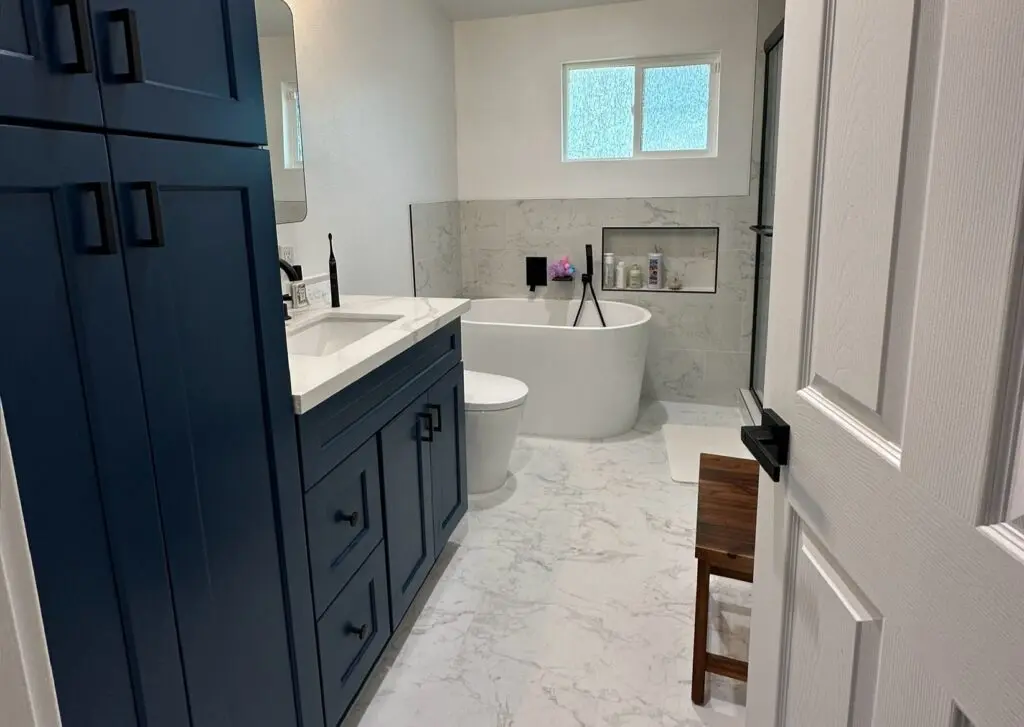
What Makes Marble Different From Other Flooring Materials
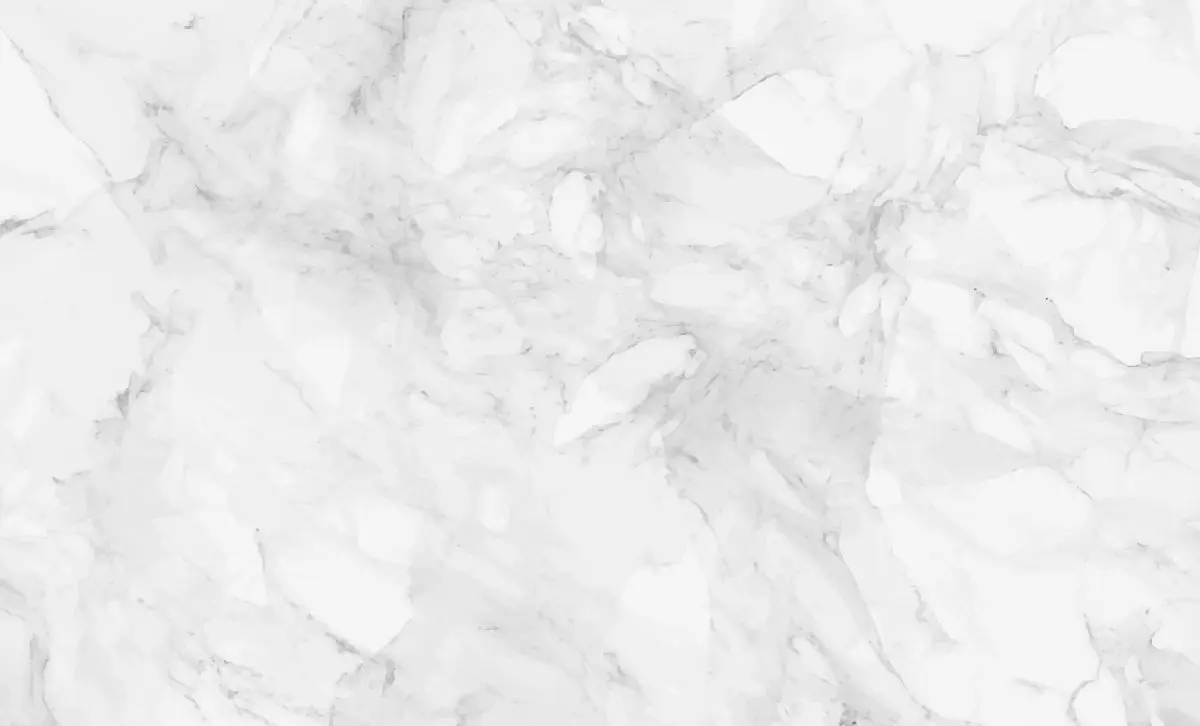
Marble is a metamorphic rock formed when limestone is subjected to extreme heat and pressure over thousands of years. The result is a dense, crystalline stone with natural veining patterns that no two slabs ever replicate exactly, giving every installation a dramatic veining pattern and crystalline structure unique to that stone. That uniqueness is part of what drives its appeal, but it also comes with physical characteristics that make it behave differently than ceramic, porcelain, or engineered stone.
Marble has been used in prestige architecture and interior design for centuries, from ancient Greek sculptures to the floors and columns of the Lincoln Memorial. Its longevity as a material of choice across so many eras speaks to both its durability and its enduring visual appeal.
We’re proud to serve homeowners in Buena Park, CA, and surrounding communities with bathroom remodeling services and more.
Understanding the physical properties of marble is essential before choosing it for a bathroom floor. It is a porous stone, it reacts to acids, and it requires more care than most synthetic alternatives. On the upside, marble stays cool to the touch, making it particularly suitable for warmer climates like Southern California where a refreshing floor surface is a genuine comfort benefit. When installed and maintained correctly, it can outlast nearly every other flooring option available.
4 Pros and Cons of Marble Bathroom Floors
Here is a balanced look at the four most important factors to consider before choosing marble for your bathroom floor.
1. Pro: Timeless Aesthetic Appeal
Marble delivers a visual quality that no manufactured material has fully replicated. Its natural veining, depth of tone, and translucent surface quality create a bathroom that feels genuinely elevated. Whether you prefer the soft gray of Carrara, the bold contrast of Calacatta, or the warm cream of Crema Marfil, there is a marble variety suited to almost every design direction. Unlike trend-based tile choices that date quickly, marble has maintained its appeal across every design era and continues to do so in 2026.
- Unique veining patterns: No two marble slabs are identical, giving every bathroom floor a one-of-a-kind appearance that porcelain tile cannot replicate.
- Finish versatility: Available in polished, honed, brushed, and tumbled finishes, allowing homeowners to customize the look and feel to match their bathroom design style.
- Spa-like atmosphere: The natural stone surface elevates the overall feel of the space, making even a modest bathroom flooring upgrade feel significantly more high-end. The way polished marble reflects light beautifully across a room is something no synthetic tile can fully imitate.
2. Pro: Adds Long-Term Property Value
Marble bathroom floors are consistently associated with luxury finishes in the real estate market. Buyers respond positively to natural stone, and marble floor tiles in particular signal quality construction and thoughtful material selection. For Buena Park homeowners who view their renovation as both a lifestyle improvement and a financial investment, marble floors are one of the few choices that tend to reinforce both simultaneously.
- Resale appeal: Natural stone flooring is a recognized value-add in residential real estate, particularly in bathrooms where buyers expect quality finishes.
- Longevity: When properly installed and sealed, marble can outlast synthetic flooring alternatives by decades, reducing the frequency of future renovation costs.
- Buyer perception: Marble signals premium construction, which can influence a buyer’s overall impression of the home’s quality during a showing.
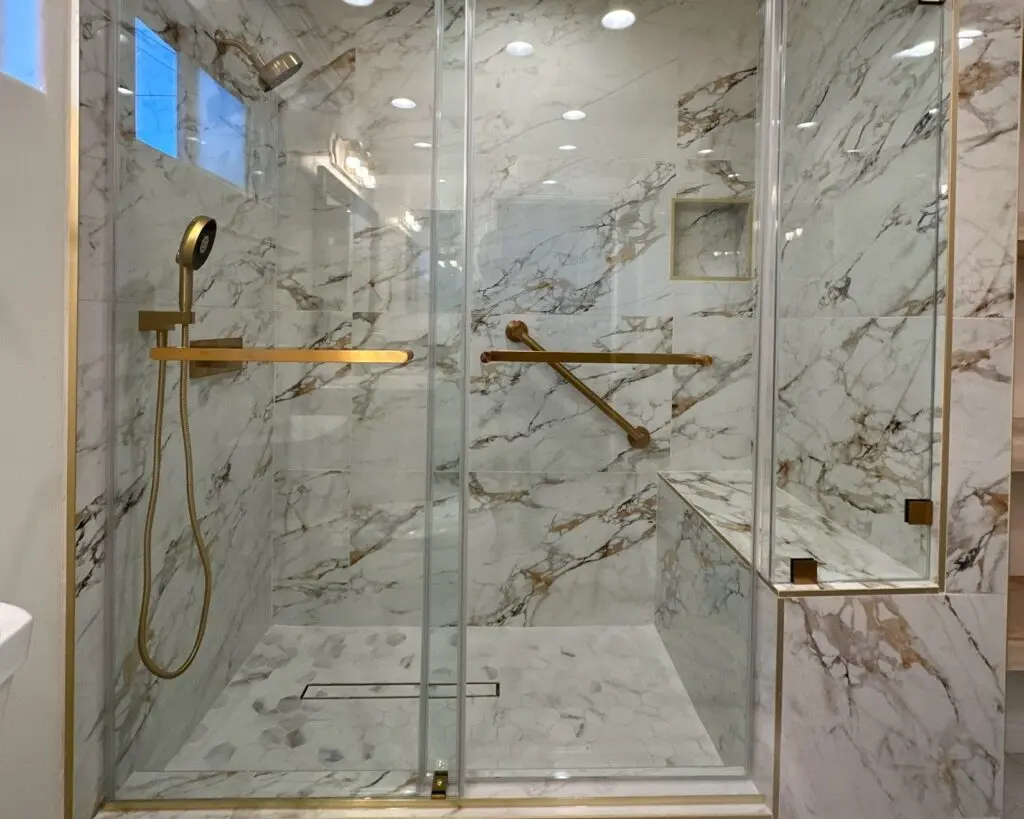
3. Con: Slippery When Wet
Polished marble surfaces offer very little grip when wet, which is a genuine safety concern in a bathroom where water on the floor is routine. This is the most commonly cited drawback among homeowners who use marble in wet zones. The solution is choosing a honed marble finish rather than a high-polish one, using smaller mosaic tile formats in shower floors and entry areas where grout lines add traction, and placing quality bath mats at exit points.
- Finish selection matters: A honed marble surface reduces slip risk significantly compared to a polished finish, making it the safer choice for bathroom floors and wet areas.
- Tile size and grout lines: Smaller mosaic formats increase the number of grout lines, which naturally improves grip and is especially important in shower floor applications.
- Bath mat placement: Strategic use of non-slip bath mats at shower exits and high-traffic zones reduces fall risk without compromising the floor’s visual impact.
4. Con: Higher Cost and Installation Complexity
Marble costs significantly more than porcelain or ceramic tile, both in material and labor. Professional installation is not optional here. The stone requires a flat, rigid substrate to prevent cracking, stone-safe mortar, careful waterproofing preparation, and precise installation to manage veining continuity. Expect added time for dry-laying, sealing after installation, and potential future maintenance or refinishing. This is not a project suited for DIY, and the difference in outcome between an experienced contractor and an inexperienced one is significant.
- Material cost: Marble is priced well above ceramic or porcelain alternatives, and slabs with dramatic veining patterns carry an additional premium at the supplier level.
- Professional installation: Marble demands a rigid, level substrate to prevent cracking over time, which may require additional prep work that adds labor hours and cost to the overall project budget.
- Ongoing maintenance costs: Periodic professional sealing and occasional refinishing are part of the long-term cost of ownership. Harsh cleaners can permanently etch marble surfaces, so homeowners need to commit to pH-neutral products and immediate spill cleanup from day one. While marble is moisture-resistant and allows easy cleanup of everyday spills, it can scratch under heavy impacts, so furniture pads and careful use in high-traffic areas are important long-term considerations.
Marble Bathroom Floor Pros and Cons at a Glance
| Factor | Verdict | Notes |
| Aesthetic appeal | Strong pro | Timeless, unique, high-end appearance |
| Property value | Pro | Natural stone adds resale appeal |
| Slip resistance | Con | Requires honed finish or mosaics in wet zones |
| Cost and installation | Con | Higher material and labor investment required |
Choosing the Right Marble Finish for a Bathroom Floor
The finish you select has more impact on safety and maintenance than most homeowners realize before installation. For homeowners who love the look but want less upkeep, marble look porcelain tiles mimic marble’s aesthetics with less maintenance and are worth considering as an alternative.
- Polished: Creates a high-gloss, mirror-like surface that reflects light beautifully and enhances color depth. Looks stunning but becomes slippery when wet and shows etching and wear more visibly over time.
- Honed: A matte, velvety surface that provides better grip and conceals light scratches and etching more effectively. The preferred choice for bathroom floors and shower areas for most contractors and designers.
- Brushed: A textured finish that offers grip, an organic feel, and a softer look. A strong option for homeowners who want the look of natural stone with added slip resistance.
- Tumbled: A rounded, aged finish most commonly seen in mosaic or smaller tile formats. Provides natural traction and works well in shower floor applications where safety is a priority.
Common FAQs About Marble Bathroom Floors
How often does marble need to be sealed in a bathroom?
Most marble floors in bathroom applications should be resealed every 12 to 18 months, though high-traffic or high-moisture areas may need attention more frequently. A simple water test can help you gauge timing. If water no longer beads on the surface and instead absorbs quickly, the seal has worn and reapplication is due.
Is marble a good choice for a shower floor specifically?
With the right finish and tile size, yes. Polished marble in large format tiles is not the right choice for a shower floor due to slip risk. Honed or tumbled marble tiles in smaller mosaic formats work well because the increased number of grout lines provides natural traction. The key is also ensuring proper slope for drainage and strong waterproofing beneath the installation.
Can marble floors be refinished if they get scratched or etched?
Yes. One of marble’s practical advantages over some flooring materials is that it can be professionally honed and repolished when the surface shows significant wear, etching, or scratching. This is not a DIY process, but it does extend the usable life of the floor considerably when done by someone experienced with natural stone.
What is the most low-maintenance type of marble for a bathroom?
Honed marble and darker varieties tend to show etching and water spots less prominently than lighter, polished varieties. Carrara marble is widely popular but its light tone makes maintenance more visible. Homeowners who prefer a lower-maintenance experience with marble should consider darker varieties or commit to a routine cleaning schedule using pH-neutral products, ensuring marble surfaces stay properly maintained over time.
C&M Home Revival Can Help You Make the Right Call
Choosing a bathroom floor material is one of the decisions that shapes how a renovation looks and feels for years. At C&M Home Revival, we help Buena Park homeowners work through exactly these kinds of choices before any work begins. We explain your options clearly, provide transparent pricing upfront, and complete bathroom projects with the kind of attention to detail that holds up over time. Free consultations are available, and our team is reachable from the first conversation through the final walkthrough.
Contact our team to get started on your bathroom remodel and find out which flooring option is the right fit for your home.
Recent Articles