Fiber Glass Door (Durable, Efficient Choice 2026)
9 Minute Read

Posted 7.27.26

There is a reason fiberglass has overtaken wood as the preferred entry door material in most new residential construction and replacement projects. A fiber glass door gives homeowners the look of natural wood without any of the maintenance demands, the dimensional stability of a material that does not warp or rot, and energy performance that steel and wood struggle to match at comparable price points. If a front door replacement is part of a larger home upgrade, our entry door installation services give Norwalk homeowners a clear picture of what the right door and installation should involve. This guide covers what makes fiberglass the smart choice in 2026 and what to know before selecting one.
Here is what this guide covers:
- Why fiberglass has become the dominant entry door material in 2026
- The key benefits that separate fiberglass from wood and steel
- Style options, finishes, and glass configurations available in 2026
- How fiberglass performs in Southern California’s specific climate
- What to look for when comparing fiberglass door products
Why Fiberglass Dominates Entry Door Selection in 2026
The shift toward fiberglass entry doors is being driven by a consistent set of homeowner priorities: durability, low maintenance, energy efficiency, and design versatility. According to Plastpro Inc’s 2026 upgrade analysis, fiberglass does not absorb moisture, swell, or rot like wood, and does not dent or rust like steel, making it particularly well-suited for homes exposed to fluctuating temperatures, humidity, and UV exposure. This combination of properties is what no competing material fully replicates at the same maintenance level.
We’re proud to serve homeowners in Norwalk, CA, and surrounding communities with windows and doors services and more.
In Southern California, where UV intensity is sustained year-round, temperature swings between day and night are significant, and coastal areas like Norwalk’s surrounding communities experience salt air exposure, fiberglass outperforms both wood and steel in long-term appearance retention and structural integrity.
The Core Benefits of a Fiberglass Entry Door
These three benefits are the most consequential for long-term performance and daily satisfaction in a Southern California entry door.
Dimensional Stability
Wood doors expand and contract with humidity and temperature changes, eventually warping, sticking, or developing gaps that compromise weather sealing and security. Steel doors are more stable than wood but can dent and are vulnerable to rust at any point where the protective coating is compromised. Fiberglass holds its shape across temperature and humidity extremes without absorbing moisture, expanding, contracting, or degrading at the surface.
- No warping: Fiberglass maintains its frame geometry across seasonal temperature swings that cause wood doors to stick or develop visible gaps
- No rot: Unlike wood, fiberglass cannot absorb water at the surface, making rot structurally impossible regardless of weather exposure
- No rust: Unlike steel, fiberglass is immune to oxidation, making it the most practical choice for coastal and humid environments
Energy Efficiency
A fiberglass door’s insulated core, typically polyurethane foam, delivers significantly better thermal performance than a hollow steel door and comparable or better performance than solid wood. The insulated core reduces heat transfer through the door panel, and the composite construction maintains a tight seal against weatherstripping over time without the frame distortion that causes drafts in older wood doors.
- Insulated core: Polyurethane foam fill delivers R-values of 5 to 10 depending on the panel thickness, significantly outperforming hollow-core steel alternatives
- Seal retention: Fiberglass maintains its door frame geometry over time, keeping weatherstripping in full contact and preventing the draft gaps that develop in warped wood doors
- ENERGY STAR compatibility: Many fiberglass entry door systems qualify for ENERGY STAR certification when combined with appropriate glass and weatherstripping configurations
Low Maintenance and Long Service Life
A wood door requires periodic sanding, staining or painting, and sealing to maintain its appearance and prevent moisture damage. A steel door requires monitoring for rust at scratches and chips, and repainting when the finish degrades. A fiberglass door requires neither. Basic cleaning with mild soap and water is the primary maintenance requirement for most fiberglass doors, and the finish holds its color and texture without the treatment cycles that wood and steel demand.
- No painting required: Factory-applied fiberglass finishes hold color and texture without the periodic repainting that wood and painted steel require
- No sealing required: Unlike wood, fiberglass does not require periodic staining or sealing to maintain moisture resistance
- Service life: Quality fiberglass doors are rated for 30 to 50-plus years of service, significantly longer than the 20 to 30-year practical lifespan of most painted wood entry doors
3 Fiberglass Door Style Directions for 2026
These three directions cover the strongest fiberglass aesthetic options available in 2026.
1. Woodgrain Fiberglass
Woodgrain fiberglass is the most widely specified fiberglass door category and the one that most directly competes with natural wood on visual quality. Modern manufacturing casts fiberglass door skins from actual wood molds, capturing authentic grain patterns, texture depth, and knot detail that reads as genuine wood from any normal viewing distance. The woodgrain surface can be stained, painted, or factory-finished in a wide range of wood tones.
In 2026, the most requested woodgrain finishes are walnut, mahogany, and warm oak, all of which pair naturally with the warm-toned exterior palettes and natural hardware finishes that are defining residential design this year.
- Most popular species: Walnut, mahogany, and oak woodgrain patterns in stained finishes; also available factory-painted in any exterior color
- Authenticity: Cast textures from actual wood molds create grain patterns, depth, and variation that printed wood-look finishes cannot replicate
- Best for: Traditional, craftsman, colonial, and transitional architectural styles where natural wood warmth is a design priority
2. Smooth Fiberglass with Bold Paint
Smooth fiberglass surfaces take paint exceptionally well and hold color without the peeling or fading that painted wood doors experience over time. In 2026, smooth fiberglass doors are being specified with bold, intentional paint colors: deep navy, forest green, terracotta, and matte black are the most widely requested front door colors. The smooth surface creates a clean, contemporary appearance that reads as deliberate and high-end, particularly when paired with modern hardware in a complementary finish.
- Paint compatibility: Factory-primed smooth fiberglass accepts exterior paint in any color and holds it significantly longer than painted wood
- Color direction: Deep saturated tones are the 2026 direction for bold front door statements; navy, hunter green, and terracotta are leading the category
- Best for: Modern, contemporary, and transitional homes where a clean surface and bold color create the primary curb appeal impact
3. Fiberglass with Decorative Glass
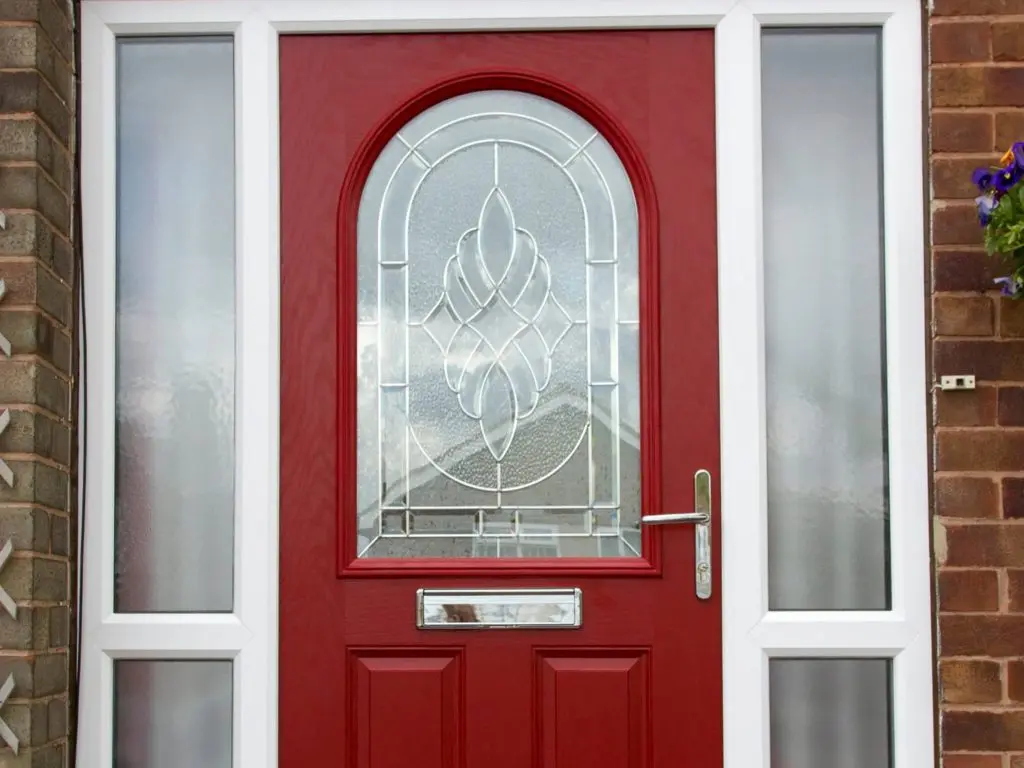
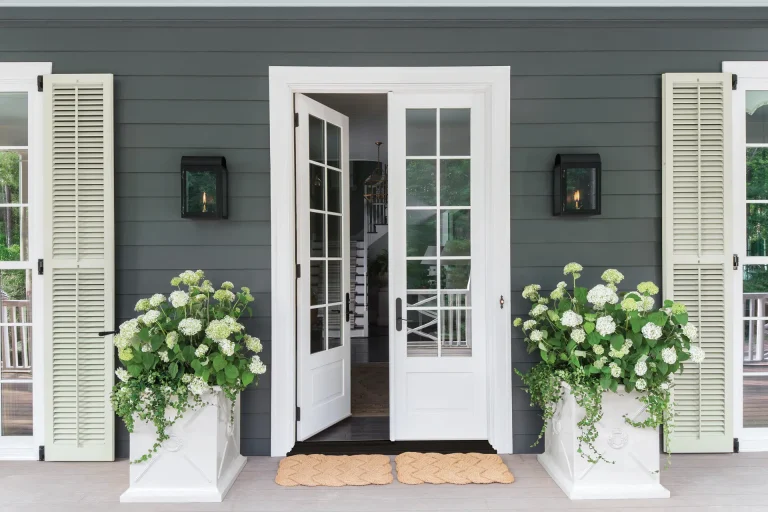
Fiberglass door systems with integrated glass panels introduce natural light into entryways while maintaining the insulated performance of the door itself. Full-lite configurations with a single large glass panel create an open, welcoming entry. Half-lite designs with glass in the upper portion balance light with privacy. Decorative glass in textured, frosted, or art glass configurations adds design detail without sacrificing any of the structural benefits of the fiberglass construction.
- Glass placement: Full-lite, half-lite, and sidelite configurations are all available in fiberglass door systems; sidelites significantly increase entry light without compromising the door panel’s insulation
- Glass type: Low-e insulated glass units within fiberglass doors maintain energy performance at the glass area; decorative options include textured, rain, and frosted configurations for privacy
- Best for: Entryways where natural light is a priority; homes where the front entry receives morning or afternoon light that can be captured without overheating the foyer
How Fiberglass Compares to Wood and Steel
This comparison covers the categories that matter most for a Southern California entry door decision.
| Category | Fiberglass | Wood | Steel |
| Maintenance level | Very low | High | Moderate |
| Moisture resistance | Excellent | Poor | Good until scratched |
| Dent resistance | Good | Good | Poor |
| Energy performance | Excellent | Good | Moderate (hollow core) |
| Design versatility | High | Very high | Moderate |
| Typical service life | 30 to 50-plus years | 20 to 30 years | 20 to 30 years |
| Paintability | Excellent | Excellent | Good |
| Cost range installed | $1,200 to $4,000-plus | $1,500 to $5,000-plus | $800 to $2,500 |
Common FAQs About Fiberglass Doors
These are the questions homeowners most commonly ask when evaluating fiberglass as an entry door material.
Can fiberglass doors be painted after installation?
Yes. Factory-primed fiberglass doors accept exterior paint in any color and hold it significantly longer than painted wood. Surface preparation is important: clean the door thoroughly, lightly sand if the surface has any sheen, apply a bonding primer if the factory primer has been exposed to UV for an extended period, then paint with a quality exterior latex or alkyd paint. Avoid extremely dark colors on south or west-facing doors that receive prolonged direct sun, as heat buildup can affect the paint bond over time.
How does fiberglass perform in Southern California’s climate?
Exceptionally well. The combination of high UV exposure, significant day-to-night temperature variation, and coastal salt air in Southern California creates conditions where wood doors deteriorate relatively quickly and steel doors are vulnerable to surface rust at any coating breach. Fiberglass handles UV exposure without fading, holds its frame geometry through temperature swings, and is immune to salt air corrosion. It is arguably the most climate-appropriate entry door material for Southern California.
How long does a fiberglass door installation take?
A standard single door replacement by a professional crew typically takes two to four hours from removal of the old door to installation, adjustment, and weatherstripping of the new unit. Doors requiring new framing, sidelite installation, or transoms above the door take longer. Most fiberglass door installations are completed in a single day.
Is a fiberglass door worth the higher upfront cost versus steel?
For most homeowners planning to stay in their home long-term, yes. The maintenance savings over 10 to 20 years in paint, sealing, and rust prevention typically offset the price premium over a steel door. The dimensional stability advantage in climates with significant temperature or humidity variation further reduces long-term costs by avoiding the frame adjustment and weatherstripping replacement that steel and wood doors require over time.
C&M Home Revival Installs Fiberglass Doors That Last
A fiberglass door installed correctly performs for decades without demanding anything beyond basic cleaning. At C&M Home Revival, we help Norwalk homeowners select the right door for their home’s architecture, climate exposure, and design direction, then install it to manufacturer specifications with the flashing, weatherstripping, and hardware alignment that the product’s performance promises depend on.
Book your free door consultation and find out which fiberglass option fits your home best.s
Recent Articles