Are Sliding Glass Doors Worth It? Styles, Benefits & Real Costs
9 Minute Read

Posted 9.19.26

Few home upgrades transform the relationship between interior and exterior space as immediately as a new sliding glass door. The right door features large glass panels that let more sunlight into rooms, creates an indoor-outdoor flow that changes how a home feels every day, and adds visible value that improves the home’s aesthetic and can increase property value by at least 15 percent according to some real estate analyses, a figure buyers reflect immediately in their offers. Sliding glass doors are also one of the more straightforward replacement projects available, making them a strong candidate for homeowners who want meaningful impact without a full-scale renovation. If this upgrade is part of a larger project, our doors and windows work helps Cypress homeowners find the right product and installation for their specific opening. This guide covers whether sliding glass doors are worth it, what the options are, and what you will actually pay in 2026.
Here is what this guide covers:
- The core benefits that make sliding glass doors worth the investment
- The four main style configurations and which spaces they suit
- Frame material options and how they affect cost and performance
- Real 2026 cost ranges for standard, mid-range, and premium installations
- What to look for before buying and what drives the final price
The Case For Sliding Glass Doors

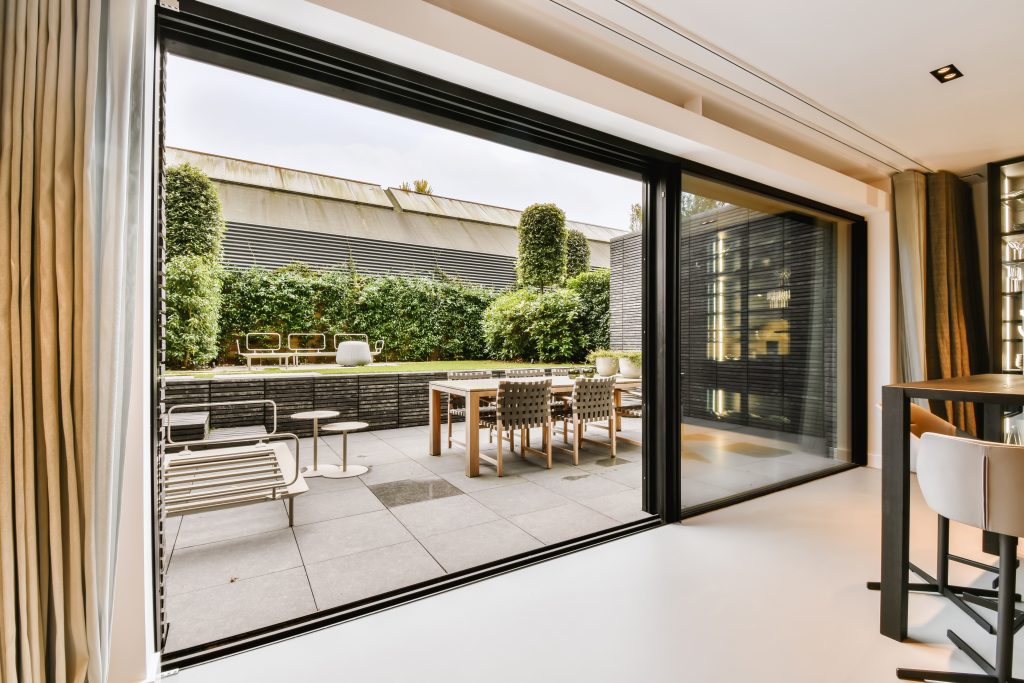
The strongest argument for a sliding glass door is the combination of natural light, fresh air, and indoor-outdoor connection that transforms any living space in a way no other door format delivers as effectively. Unlike French doors, which require swing clearance on both sides of the opening, sliding doors operate on horizontal tracks that require zero floor clearance. Furniture, outdoor seating, and planters can be positioned directly against the glass without blocking access.
We’re proud to serve homeowners in Cypress, CA, and surrounding communities with windows and doors services and more.
4 Sliding Glass Door Styles Worth Knowing
Style selection is about matching the door configuration to the opening size, the space on either side, and the architectural character of the home. These four configurations cover the full range of what is available in 2026.
1. Standard Two-Panel Slider
The two-panel slider is the most widely installed configuration: one fixed panel and one sliding panel that moves on a horizontal track. It suits openings from 5 to 8 feet wide and is the most straightforward installation of any sliding door type. The hardware is simple, the track is single, and the price reflects both of those efficiencies. Standard two-panel sliders are the right choice for most backyard and patio access openings, providing easy access to outdoor areas in residential applications.
- Best for: Standard patio and backyard access openings; rooms where a moderate-sized opening is adequate
- Width range: 5 to 8 feet standard; available in non-standard widths with custom fabrication
- Cost range installed: $800 to $2,500 depending on frame material and glass package
2. Three-Panel Slider

Three-panel configurations include one or two fixed panels and one or two sliding panels, creating a wider opening than a standard two-panel allows. They suit openings from 9 to 12 feet where a single sliding panel would look undersized or where the design calls for a more expansive glass wall effect without the cost of a full multi-panel system. Three-panel sliders are popular in open-plan living areas where the kitchen or dining space connects to patios, balconies, or outdoors entertaining areas.
- Best for: Wider openings in open-plan living areas; spaces where a standard two-panel looks undersized
- Width range: 9 to 12 feet typical
- Cost range installed: $1,500 to $4,000 depending on frame material and glass package
3. Multi-Panel Stacking Slider
Multi-panel stacking systems use three to six panels on parallel tracks that stack against one side of the opening when fully open, creating an unobstructed pass-through that is as close to removing a wall as a door can achieve. These systems are the premium end of the sliding door category, suited to large living areas, luxury primary bedroom connections to outdoor spaces, and any application where the goal is a fully open indoor-outdoor experience. They require professional installation and structural header sizing appropriate for the span.
- Best for: Large indoor-outdoor living applications; luxury primary suites; open-plan entertaining areas where full wall removal is the goal
- Width range: 12 feet to over 30 feet depending on the system and number of panels
- Cost range installed: $5,000 to $20,000 and above for large custom configurations
4. Pocket Sliding Door
Pocket sliders retract fully into a cavity within the wall rather than stacking on the exterior face. When fully open, the door is completely invisible, leaving a clean, unobstructed opening with no exposed panel or track visible. Pocket doors require structural planning during construction or renovation because the pocket cavity must be framed into the wall. They are the most architecturally refined sliding door option and a perfect fit for applications where a seamless indoor-outdoor transition is the primary goal, though they are also the most installation-intensive as a retrofit.
- Best for: Applications where visible door panels and tracks are an aesthetic concern; spaces designed for a seamless indoor-outdoor transition
- Width range: Typically 6 to 12 feet for residential pocket systems
- Cost range installed: $2,000 to $8,000 depending on wall construction and panel configuration
Frame Material Options and What They Mean for Cost
Frame material is the primary cost driver in sliding glass door selection after configuration. Sliding glass doors are made from durable, weather-resistant materials across all major frame types, though they vary significantly in thermal performance, maintenance requirements, and cost.
- Vinyl: $800 to $2,500 installed; most common residential material; no painting required; good thermal performance; available across the full ENERGY STAR performance range; slight flex at larger widths
- Aluminum: $1,200 to $4,000 installed; slimmer frames allow more glass area; strong for large openings; conducts heat and cold unless thermally broken; best for contemporary architectural styles
- Fiberglass: $1,500 to $4,500 installed; most dimensionally stable material; best thermal performance; paintable; longer service life than vinyl; higher upfront cost
- Wood composite: $2,000 to $6,000 installed; natural wood interior with durable exterior composite; premium aesthetics; requires more maintenance than vinyl or fiberglass
- Wood: $3,000 to $8,000 installed; highest visual quality; most maintenance-intensive; best suited to traditional architectural styles with covered outdoor spaces
Real 2026 Cost Ranges for Sliding Glass Door Installation
Most homeowners in Southern California pay between $1,200 and $4,500 for a standard sliding glass door installation, with that range reflecting a vinyl or aluminum two-panel slider in a pre-existing opening. The variables below push costs above or below that baseline.
- Pre-existing opening: The least expensive scenario; the new door slides into a frame that already exists with minimal structural modification required
- New opening in a non-load-bearing wall: Adds $500 to $1,500 for framing and header work beyond the door cost
- New opening in a load-bearing wall: Adds $800 to $2,500 for a properly sized structural header before installation can proceed
- Glass package upgrade: Low-e double-pane is standard; triple-pane adds $300 to $800; impact-rated glass required in some coastal jurisdictions adds $400 to $1,200
- Disposal and finishing: Old door removal adds $100 to $300; interior and exterior trim finishing adds $200 to $600 depending on the scope
Common FAQs About Sliding Glass Doors
These are the questions homeowners most commonly ask when evaluating a sliding glass door installation. The answers apply to Southern California homes and the specific conditions Cypress homeowners face.
Are sliding glass doors energy efficient?
Modern sliding glass doors with low-e double-pane or triple-pane glass are significantly more energy efficient than older single-pane doors and are available with ENERGY STAR certification across all major frame materials. The thermal performance of a new sliding door depends on both the glass package and the frame material: fiberglass and thermally broken aluminum frames outperform standard aluminum at equivalent glass specifications. In Southern California’s climate, solar heat gain coefficient is the most important specification to optimize, not just U-factor.
How secure are sliding glass doors?
More secure than their reputation suggests when properly specified. Modern sliding glass doors include multi-point locking systems that engage at multiple points along the frame, making pry-open attacks significantly more difficult than single-point locks. Anti-lift pins or bars prevent the panel from being lifted off the track, addressing the most common sliding door security vulnerability. Tempered or laminated safety glass is standard in California for large glass panels and resists shattering in a way that makes glass breakage less practical as an entry method.
How long does sliding glass door installation take?
A standard two-panel replacement in an existing opening takes two to four hours for a professional crew. New opening creation, structural header work, and large multi-panel systems extend this to one to two days. Custom or multi-panel stacking systems may require two to three days for installation and finishing. Most standard residential installations are completed in a single day.
Is a sliding glass door or French door better for my space?
Sliding doors are better where floor clearance is limited, where the opening is wide, or where the functionality and simplicity of operation are a priority. French doors are better where the architectural style of the home calls for a hinged pair, where the opening is narrower, or where the premium appearance of a swinging door suits the design direction. For most Southern California outdoor living applications, sliding doors deliver more glass area, more opening width, and better space efficiency than French doors at a comparable or lower cost.
C&M Home Revival Gets the Right Door Into the Right Opening
A sliding glass door that is sized correctly, framed properly, and installed with the right weatherstripping and hardware performs for decades without requiring attention. At C&M Home Revival, we help Cypress homeowners select the right configuration and frame material for their opening, handle any structural work the installation requires, and install to manufacturer specifications. Written estimates, free next-day consultations, and a project manager on every job.
Get a free sliding door quote and find out exactly what the right installation will cost for your home.
Recent Articles