How Long Does It Take to Replace a Roof? A Realistic Timeline
9 Minute Read

Posted 10.14.26

The question sounds simple. The answer is not. How long does it take to replace a roof depends on whether you are asking about the installation itself, the full project from first call to final inspection, or the total window including scheduling, permitting, and material lead times. Each has a different and honest answer. Homeowners who plan a roof replacement project around only installation time are almost always caught off guard by how much prep happens before a single shingle comes off. If you want a realistic timeline for your specific situation, a free inspection from our team gives Carson homeowners a project-specific picture rather than a national average. This guide breaks down every phase of the roof replacement timeline with real 2026 numbers.
Here is what this guide covers:
- The full project timeline from first call to final walkthrough
- How long installation actually takes by material type and roof complexity
- The phases before installation that most homeowners do not account for
- Eight variables that extend the timeline beyond the baseline
- What to expect on installation day and how to prepare
The Full Project Timeline: What Most Guides Get Wrong

Most online resources answer the roof replacement timeline question by describing installation only. A crew arrives and replaces the shingles in one to three days. That is accurate for the installation phase. It is not accurate for the full project.
According to Elite Roof and Solar’s 2026 timeline guide, when you factor in estimates, permitting, material ordering, and scheduling, the full roof replacement timeline often runs four to eight weeks from the first phone call to the final walkthrough. A homeowner who calls a roofing contractor expecting work to begin that week is typically looking at a two-to-four-week minimum before installation starts even in the most efficient scenarios.
We’re proud to serve homeowners in Carson, CA, and surrounding communities with roofing services and more.
The four-to-eight-week average roof replacement timeline is not contractor inefficiency. The roof replacement process covers inspection, estimate, contract signing, material ordering, permitting, scheduling, and then installation. Each phase has its own timeline, and several are outside the contractor’s direct control.
Phase Breakdown: From First Call to Final Inspection
Each phase has its own timeline, and several are outside the contractor’s control.
Inspection and Estimate
A professional inspection and written estimate typically takes one to two days from initial contact. C&M Home Revival offers free next-day inspections, which compresses this phase significantly. The estimate should specify material by brand, underlayment, accessories, labor scope, permit responsibility, and payment schedule.
- Typical timeline: One to three days from initial contact to written estimate
- What to bring: Any existing inspection reports, insurance claim documentation if applicable, and your preferred material selections if you have researched options
Contract Signing and Material Ordering
After signing, the contractor orders materials. Standard architectural asphalt shingles from Owens Corning and GAF are typically in stock at regional distributors and arrive within three to seven business days. Custom colors, tile, slate, and metal systems require longer lead times.
- Standard asphalt shingles: Three to seven business days from order to delivery
- Premium or specialty materials: Two to six weeks depending on the product and manufacturer availability
- Implication: Material selection affects the pre-installation timeline as much as scheduling does
Permit Processing
Like-for-like asphalt shingle replacements in many California cities do not require a permit, but this varies by jurisdiction and should be confirmed before work begins. When a permit is required, processing in Los Angeles and Orange County ranges from five business days to three weeks.
- No permit required: Removes this phase entirely from the timeline
- Standard permit processing: Five to fifteen business days in most Southern California cities
- Complex projects: Three to four weeks when structural modifications or HOA approval are required
Scheduling and Installation
Established contractors typically have a one-to-three-week scheduling backlog for non-emergency work. Emergency situations with active leaks or storm damage are prioritized with faster windows. Once scheduled, the actual roof installation timeline depends on the factors below.
- Contractor backlog: One to three weeks for planned work in normal market conditions
- Emergency scheduling: Often faster; active leaks and storm damage typically move to the front of the schedule
- Weather dependency: No reputable contractor strips a roof when rain is forecast; weather windows in Southern California’s rainy season can add days to the schedule
8 Factors That Determine How Long Installation Takes
These eight variables determine whether the installation takes one day or five.
1. Roof Size
Roofing is measured in squares, where one square equals 100 square feet of actual roof surface. A skilled four-to-six person crew can tear off and reshingle 15 to 20 squares per day under normal conditions.
- Small roof (under 15 squares): Often completed in a single day
- Mid-size roof (15 to 25 squares): One to two days for a full crew
- Large roof (25 to 40 squares): Two to three days
2. Roof Pitch and Complexity
Steep roofs require safety equipment and slower movement. A roof above 7:12 pitch adds meaningfully to installation time. Multiple planes, valleys, dormers, and skylights each add time at every flashing transition.
- Simple gable (two planes, low pitch): Fastest installation; minimal transitions
- Hip roof (four planes): Moderate additional time for ridge and hip intersections
- Complex roof with dormers and skylights: Add 20 to 40 percent to the baseline installation time
3. Number of Existing Layers
California building code limits most roofs to two layers of asphalt shingles. Removing an old roof with two existing layers takes 15 to 30 percent more time than a single-layer tear-off.
- Single-layer tear-off: Standard pace; one layer removed before new material goes down
- Two-layer tear-off: Adds one to four hours depending on roof size
4. Decking Condition
Rotted or damaged decking discovered during tear-off must be repaired before new material goes down. This is the most common cause of installation taking longer than the original estimate.
- Clean deck: No additional time beyond standard installation
- Spot repairs: One to four hours for localized damage
- Extensive decking replacement: Add one full day or more for widespread rot or structural damage
5. Roofing Material
Different materials install at different rates. Asphalt shingles are the fastest installation. Tile, metal, and slate systems require more precise installation and take significantly longer per square.
- Asphalt shingle roof: One to three days for most homes with architectural shingles
- Metal roofing: Three to six days depending on system type
- Concrete tiles or clay tile: Seven to ten days for most residential projects
- Natural slate: Ten to fifteen days depending on roof complexity
6. Crew Size
A larger roofing crew completes the same work faster. Confirm crew size expectations with the contractor before signing to understand the realistic installation window.
- Three-person crew: Expect one to two additional days versus a full six-person crew on the same project
- Six-person crew: Most efficient for standard residential replacements; reduces weather-window risk by compressing the exposed period
7. Weather
Roofing cannot proceed during rain. A contractor who strips a roof when rain is forecast is creating a liability, not serving the homeowner. In Southern California’s concentrated rainy season from November through March, scheduling around weather windows can add days to the project timeline.
- Dry season (April through October): Minimal weather delay risk in most years
- Rainy season: Plan for potential weather delays; confirm the contractor’s policy on rain-day protocols and how they protect exposed decking
8. Hidden Damage and Structural Issues
Structural issues discovered during tear-off cannot be identified from the exterior before work begins and represent the highest variable risk to the installation timeline.
- Framing repair: Add one to two days for significant structural issues
- Complete deck replacement: Add one to two days depending on roof size
What to Expect on Installation Day
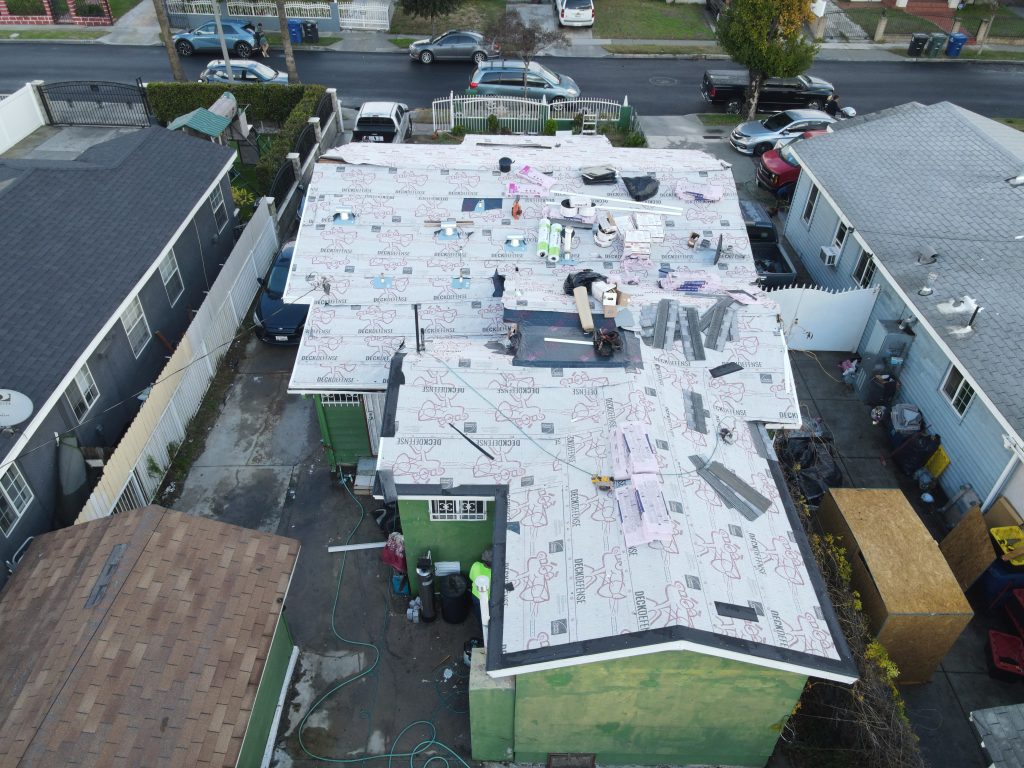
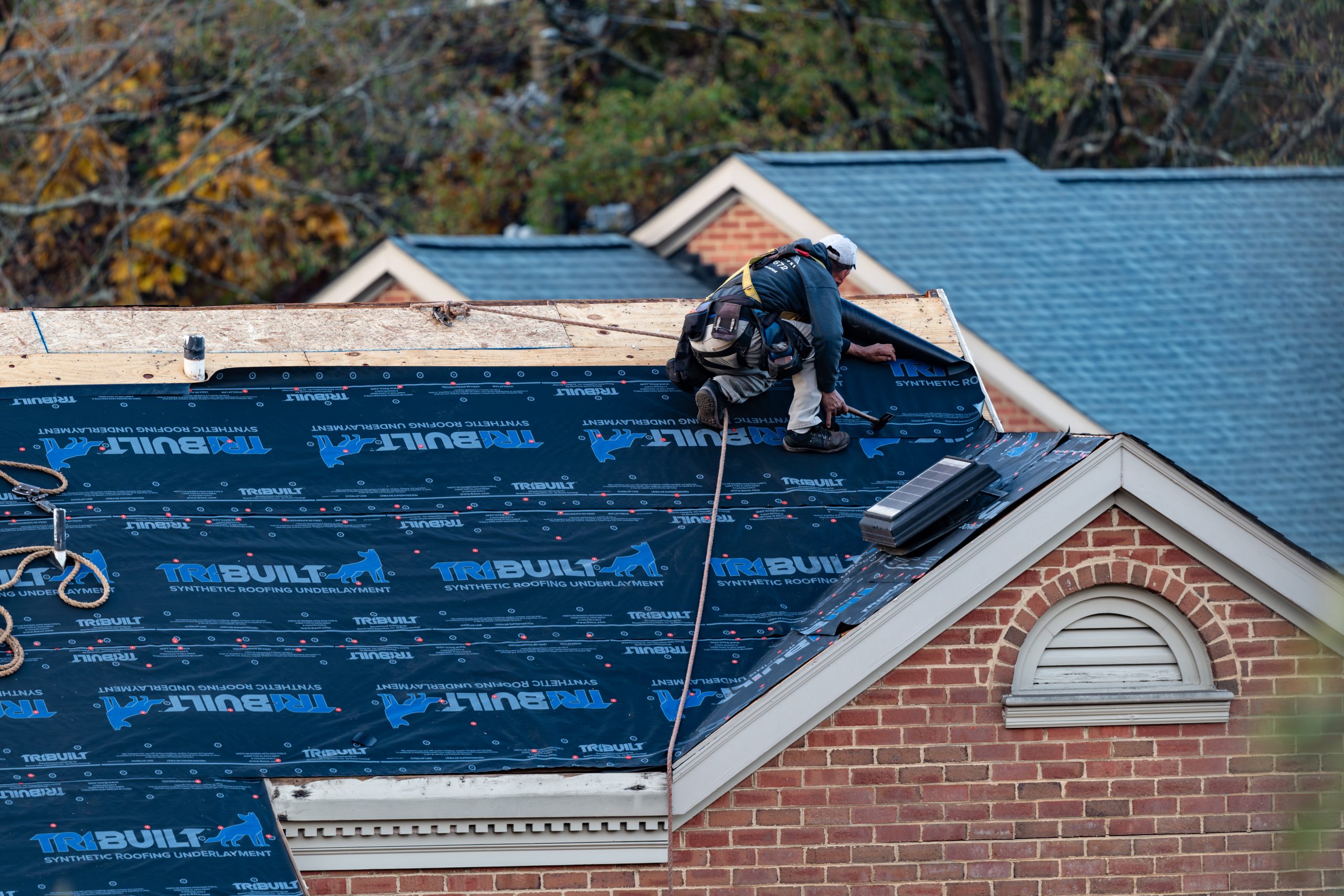
Installation day is the most disruptive day of the project. A full crew arrives early, typically between 7 and 8 AM. Noise is significant throughout tear-off and nailing. Discuss debris management with the contractor beforehand.
- Morning: Crew sets up, loads equipment, protects landscaping and HVAC equipment, begins tear-off from one section
- Midday: Tear-off complete, deck inspection and any repairs completed, underlayment installation begins
- Afternoon: Shingle installation, flashing integration, ridge cap, cleanup of debris and roofing nails
- End of day: Final walkthrough with homeowner, magnetic nail sweep of yard and driveway, dumpster or trailer loaded
Common FAQs About Roof Replacement Timelines
These are the questions Carson homeowners most commonly ask when planning a roof replacement. The answers apply to Southern California conditions.
Can a roof be replaced in one day?
Yes, for standard residential roofs. To replace a roof this size, a typical 20 to 25-square home with a moderate pitch and in-stock materials can be completed in one long day by a full crew. Larger homes, steeper pitches, premium materials, and deck damage extend the timeline. Confirm realistic expectations with the contractor before installation day.
What is the best time of year to replace a roof in Southern California?
Spring through early fall, from April through October, provides the most reliable weather windows and the least risk of rain delays. Late winter scheduling, January through March, requires planning around rain-season weather events. Southern California’s climate is mild enough that roofing can proceed year-round with appropriate weather monitoring.
What happens if it rains during my roof replacement?
A reputable contractor will not strip a roof when rain is forecast. If weather changes unexpectedly mid-installation, crews protect exposed decking with tarps until conditions allow work to resume. Confirm the contractor’s rain protocol and tarp procedure before work begins. Any days lost to weather do not typically add cost to the project.
How far in advance should I schedule a roof replacement?
For planned work where you want the roof replaced on a set timeline, beginning the conversation four to six weeks before your desired window is ideal. This allows time for the inspection, estimate, contract, material ordering, and permitting without rushing any phase. Emergency replacements driven by active leaks or storm damage move faster but may carry premium scheduling costs.
C&M Home Revival Gives You a Realistic Timeline Before You Commit
The timeline conversation should happen before the contract is signed. At C&M Home Revival, every Carson homeowner receives a clear project timeline with each written estimate, covering material lead times, permit requirements, and installation duration based on the specific roof, not a national average. Free next-day inspections. Written estimates before any commitment.
Book your free inspection today and get a timeline you can actually plan around.
Recent Articles