How To Choose Furniture For A Bathroom (8 Smart Tips)
9 Minute Read

Posted 6.17.26

Most bathroom renovations stall not at the design stage but at the decision stage. There are too many options, too many variables, and not enough guidance on what actually matters. How to choose furniture for a bathroom is a question that deserves a structured answer rather than a catalog to browse. If you are planning a remodel and want hands-on guidance before committing to anything, our bathroom remodeling services are built around exactly that kind of support. This guide gives Torrance homeowners eight practical tips to make confident, lasting furniture decisions.
Here is what this guide covers:
- How to measure and plan before choosing any furniture
- What materials hold up best in a bathroom environment
- How to match furniture to your layout and design style
- Storage, comfort, and functionality considerations
- What to prioritize based on your bathroom size and budget
The Foundation of Good Bathroom Furniture Decisions
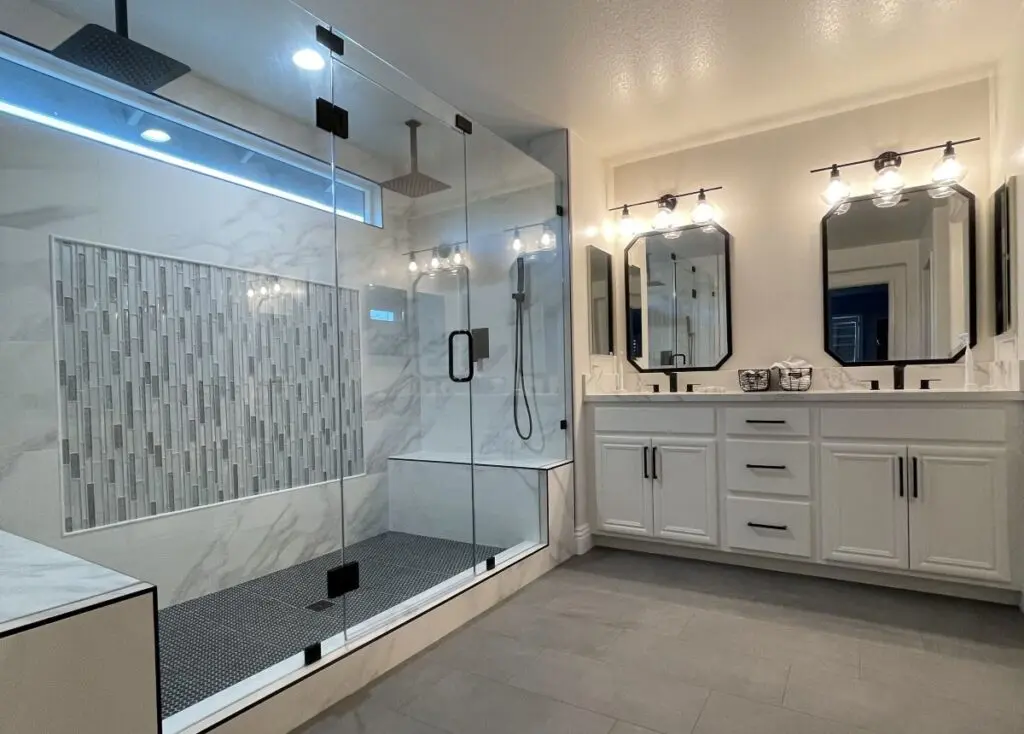
Choosing bathroom furniture is about selecting pieces that perform in a high-moisture environment, fit the physical space, and support how the bathroom is actually used. Getting these fundamentals right before browsing styles prevents the most common renovation mistakes.
According to industry tracking data, floating vanities now account for more than 40 percent of vanity sales in North America, which speaks to how significantly homeowner priorities around function and aesthetics have shifted in recent years. Before following any trend, though, it pays to understand what your specific bathroom actually needs.
We’re proud to serve homeowners in Torrance, CA, and surrounding communities with bathroom remodeling services and more.
8 Smart Tips for Choosing the Right Bathroom Furniture
These tips apply whether you are furnishing a compact guest bathroom or a full primary suite. Work through them in order for the most structured approach.
1. Measure the Space Before You Do Anything Else
The most common mistake homeowners make is selecting furniture before checking whether it physically fits. Measure the full dimensions of your bathroom, including ceiling height, door swing clearance, toilet placement, and structural obstructions. Note where plumbing rough-ins are located, since moving them adds significant cost.
- Floor plan first: Sketch your bathroom layout with accurate measurements before browsing any furniture, including the location of windows, doors, and existing plumbing.
- Clearance requirements: Allow at least 21 inches in front of the toilet and vanity for comfortable use, and account for door swing in any direction that could conflict with furniture placement.
- Ceiling height: Tall storage towers and medicine cabinets need enough wall height to function properly, and some lighting configurations require specific clearances above vanity tops.
2. Choose Materials Built for Bathroom Conditions
Humidity, moisture, and temperature fluctuations are constants in a bathroom, and not every material handles them equally well. Solid wood with proper moisture-resistant finishes performs well but requires sealing and ongoing care. Plywood is the recommended choice for cabinet box construction because it resists swelling and holds fasteners better than MDF under sustained humidity. MDF with quality paint or foil is a reasonable option for door fronts but should not be used for cabinet boxes without sealed edges. Avoid unsealed particleboard entirely, as it absorbs moisture and deteriorates quickly.
- Hardware quality: Hinges and drawer slides are used dozens of times daily. Stainless steel or anti-corrosion coated hardware outlasts budget fittings significantly.
- Countertop materials: Quartz is the most durable low-maintenance option. Marble and granite require sealing. Laminate is affordable but vulnerable at seams.
- Finish durability: Matte and satin finishes hide fingerprints and water spots better than high-gloss options.
3. Match the Furniture Scale to the Bathroom Size
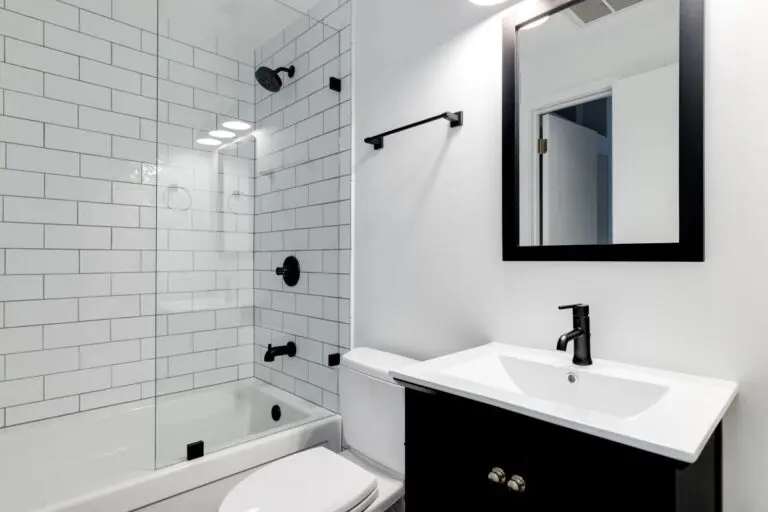
Scale is one of the most overlooked factors in bathroom furniture selection. A large vanity in a small bathroom feels cramped. A small vanity in a generous primary bath feels incomplete. For bathrooms under 50 square feet, a floating wall-mounted vanity in the 24 to 30 inch range is almost always the right choice.
- Small bathrooms: Wall-mounted vanities, tall slim storage towers, and recessed shelving maximize usable space without consuming floor area.
- Medium bathrooms: A single vanity in the 36 to 48 inch range with a coordinating storage tower or medicine cabinet usually covers both function and proportion comfortably.
- Large primary bathrooms: A double vanity at 60 inches or wider, paired with a freestanding tub and a separate storage piece, fills the space without overcrowding it.
4. Set the Vanity Height for Comfort, Not Convention
Traditional vanity height sits at 32 inches. Contemporary standard has shifted to 34 to 36 inches for most adults, which mirrors kitchen counter ergonomics and is more comfortable for daily use. A floating vanity installed at custom height is the most practical solution for households with varying needs.
- Standard vs. comfort height: The 34 to 36 inch range reduces back strain during grooming and is now the default recommendation for adult bathrooms in most design guidance.
- Kids’ bathrooms: Lower heights around 30 to 32 inches remain appropriate for bathrooms used primarily by children and can be updated as needs change.
- Accessibility: For aging-in-place or accessibility-focused designs, a floating vanity at a height that accommodates seated use is far more practical than a freestanding option.
5. Prioritize Storage That Matches How You Actually Use the Space
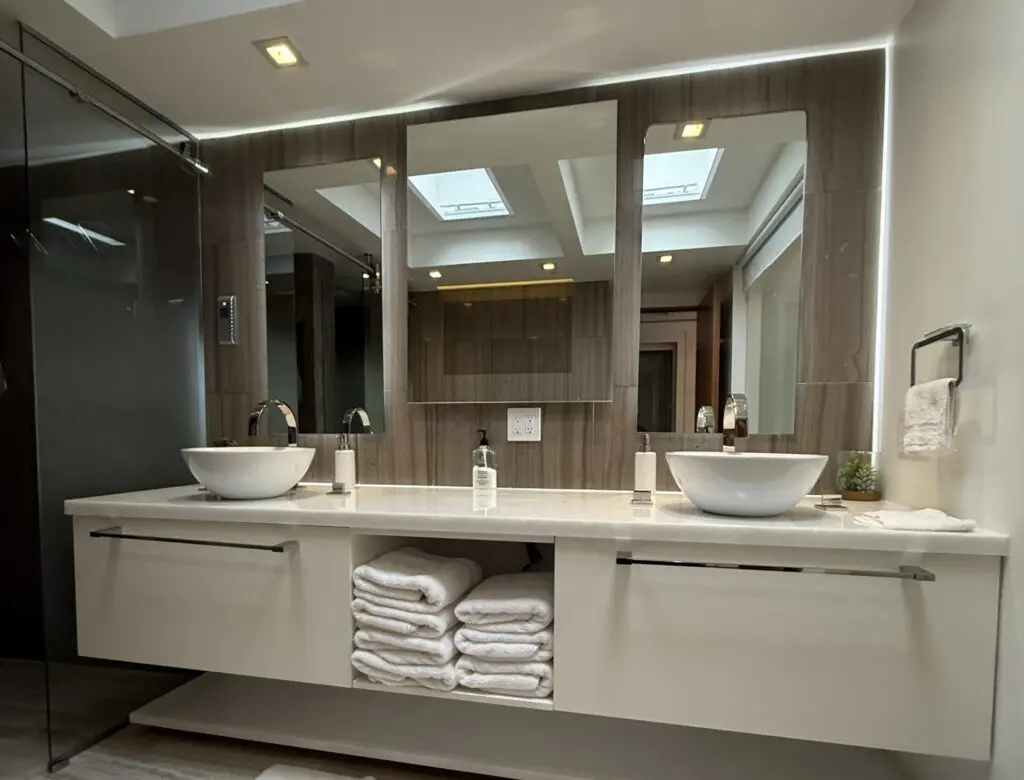
Storage that looks good in a showroom and storage that works daily are not always the same. Think about what you need to store before choosing a configuration. Deep drawers suit hair tools and skincare. Open shelving works for frequently used items but requires discipline. A mix of closed cabinets, deep drawers, and a medicine cabinet covers the broadest range of needs.
- Deep drawers: Accommodate a far wider range of items than shallow shelves and reduce countertop clutter significantly in busy bathrooms.
- Soft-close hardware: Now a baseline expectation rather than a premium upgrade, soft-close drawers and doors reduce noise and extend the life of the furniture.
- Medicine cabinets: Recessed or surface-mounted medicine cabinets add meaningful hidden storage space directly above the vanity without consuming floor area or wall surface.
6. Align the Furniture Style With the Room’s Design Direction
Furniture style sets the tone for everything else in the bathroom. In 2026, the dominant directions are warm wood finishes, furniture-style pieces for transitional bathrooms, and floating wall-mounted vanities for modern spaces. Matching hardware finish across the vanity, faucet, and fixtures creates visual continuity.
- Modern: Clean lines, flat-panel doors, wall-mounted installation. Pairs with warm wood tones trending in 2026.
- Transitional: Shaker-style doors, simple hardware, neutral tones. The most flexible direction for homes without a strong style lean.
- Furniture-style: Tapered legs and finishes referencing bedroom furniture rather than built-in cabinetry. A defining look of 2026.
7. Factor in Lighting When Selecting Furniture Pieces
Lighting and furniture selection should happen together rather than sequentially. A vanity mirror without task lighting produces shadows that make grooming difficult. A medicine cabinet with integrated LED lighting solves both storage and illumination in one piece.
- Vanity lighting: Wall sconces mounted at eye level on either side of the mirror provide the most flattering and even task lighting for grooming.
- Integrated LED medicine cabinets: Combine anti-fog technology, even task lighting, and hidden storage into a single unit that eliminates the need for separate fixtures.
- Under-vanity lighting: LED strip lighting beneath a floating vanity adds a layer of ambient warmth and makes the floor area feel more expansive.
8. Set a Realistic Budget Before You Start Shopping
Bathroom furniture pricing spans a wide range, and understanding the segments helps homeowners set expectations before falling in love with a piece that does not fit their budget. Budget vanities in the $150 to $500 range typically use thinner materials and lower-quality hardware. Mid-range options between $500 and $1,200 represent the best value in the current market, offering solid construction and good design without the premium pricing of custom work. Custom and semi-custom furniture starts above $1,500 and delivers the best fit, finish, and longevity for primary bathrooms where quality matters most.
- Where to invest: Spend more on the vanity and hardware, touched daily. Save on accessories that can be swapped later.
- Where to save: Shelving, towers, and benches offer strong style impact at a fraction of vanity cost.
- Long-term value: Quality furniture lasts 15 to 20 years. A mid-range investment often costs less than replacing a budget piece twice.
Bathroom Furniture Decision Checklist
| Decision | Key Question | Action |
| Measurement | Does it fit? | Measure before browsing |
| Material | Will it last? | Plywood boxes, sealed finishes |
| Scale | Right for the room? | Match vanity width to space |
| Height | Comfortable daily? | 34 to 36 inches for adults |
| Storage | Matches how space is used? | Deep drawers, closed cabinets |
| Style | Fits design direction? | Align finish and hardware |
| Lighting | Planned alongside furniture? | Look for integrated lighting |
| Budget | Right for the space? | Invest in vanity, save on accessories |
Common FAQs About Choosing Bathroom Furniture
How do I know if a vanity is too big for my bathroom?
A vanity is too large if it leaves less than 21 inches of clear floor space in front of the toilet or compromises door swing in any direction. For bathrooms under 50 square feet, keep the vanity at 30 inches wide or under. For small bathrooms, a floating wall-mounted vanity is almost always the right choice because the visible floor beneath it makes the room feel significantly larger.
What is the most durable vanity material for a bathroom?
Plywood is the most durable material for cabinet box construction in a bathroom environment. It resists swelling, holds fasteners well over time, and handles humidity better than MDF or particleboard. For door fronts, solid wood and sealed MDF are both good options. Avoid particleboard without sealed edges in any high-moisture application.
Should I buy furniture as a set or piece by piece?
Buying the vanity, mirror, and lighting as a coordinated set produces the most cohesive result with the least planning effort. Sourcing each piece separately gives flexibility but requires more work to align finishes, proportions, and hardware. For primary bathrooms, a coordinated approach almost always reads better.
How far in advance should I order bathroom furniture?
Custom furniture typically takes 8 to 12 weeks. In-stock pieces can arrive in one to two weeks. Order early in the renovation process so furniture arrives before installation is ready rather than after.
C&M Home Revival Makes the Process Simple
Choosing bathroom furniture is easier when you have someone to walk through the options with you before the pressure of a renovation timeline sets in. At C&M Home Revival, we help Torrance homeowners make decisions that are right for the space, the budget, and the long term. Every project starts with a clear conversation, a written estimate, and a timeline you can count on. Free consultations are available.
Contact our team to schedule your free consultation and start planning your bathroom renovation the right way.
Recent Articles